 myconaut
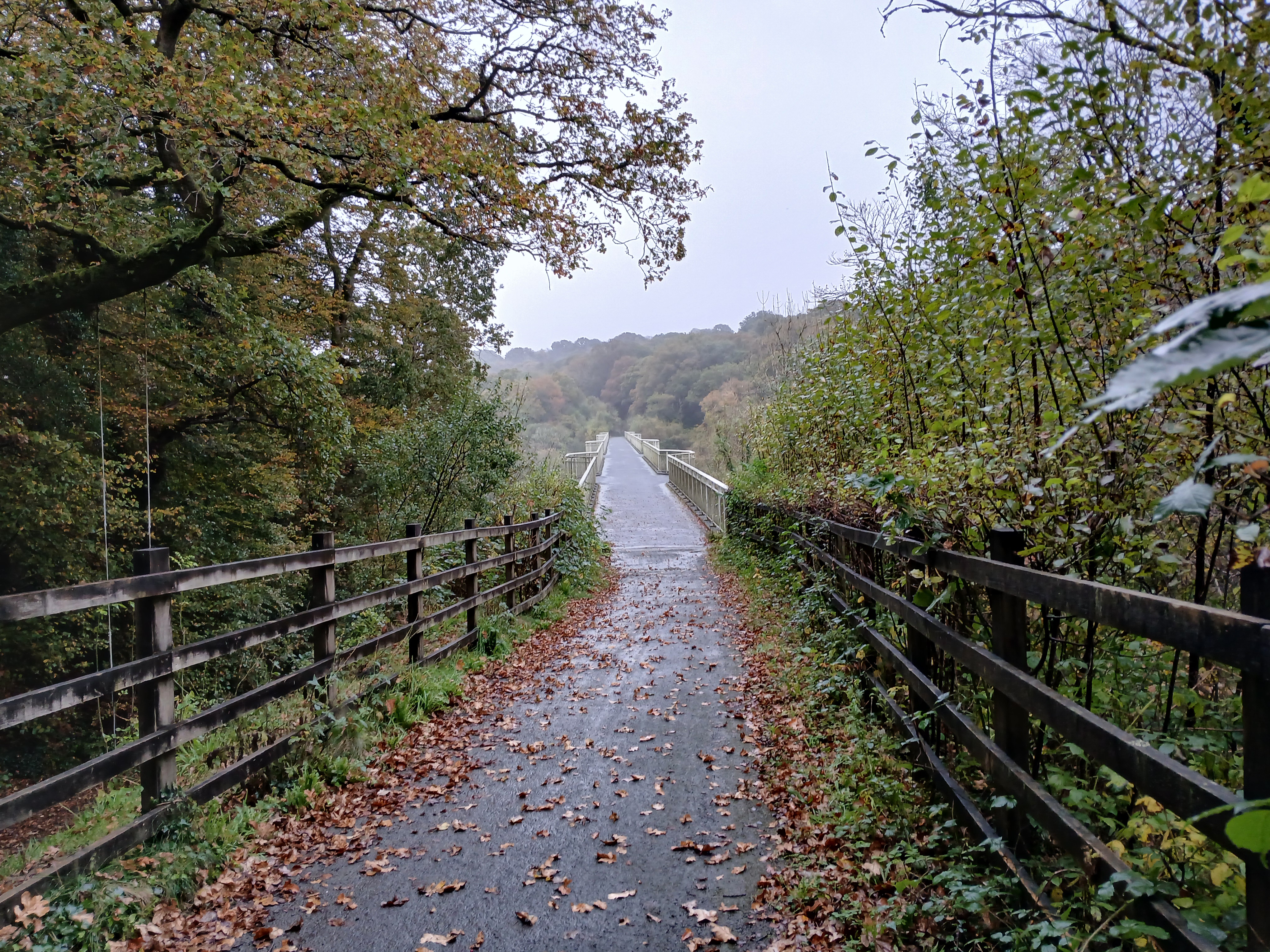
There are journeys measured in miles, and others measured in the distance between looking and seeing. On an October afternoon in Devon, a river, a bridge, a tunnel and a few modest fungi made a persuasive case for the second kind.
Dartmoor and Tavistock · 28 October 2024
Opening note
On 28 October 2024, during a visit to Gregg in Devon, the photographic record began beside a river and ended in Tavistock. Thirty-one photographs and one short film remain; between them is the outline of an afternoon in which the small observations repeatedly took precedence over the grand itinerary.
Where the river refuses instructions
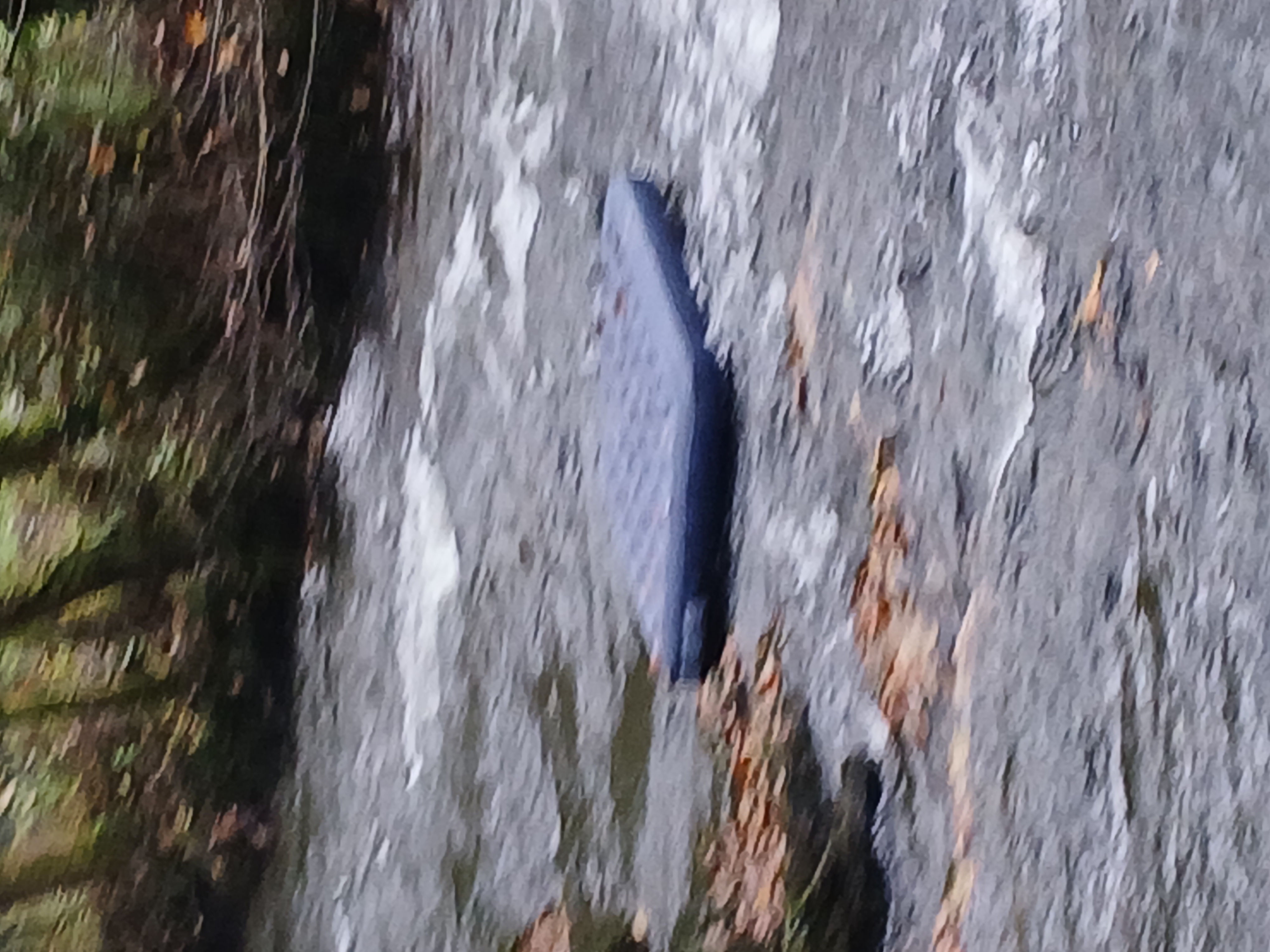
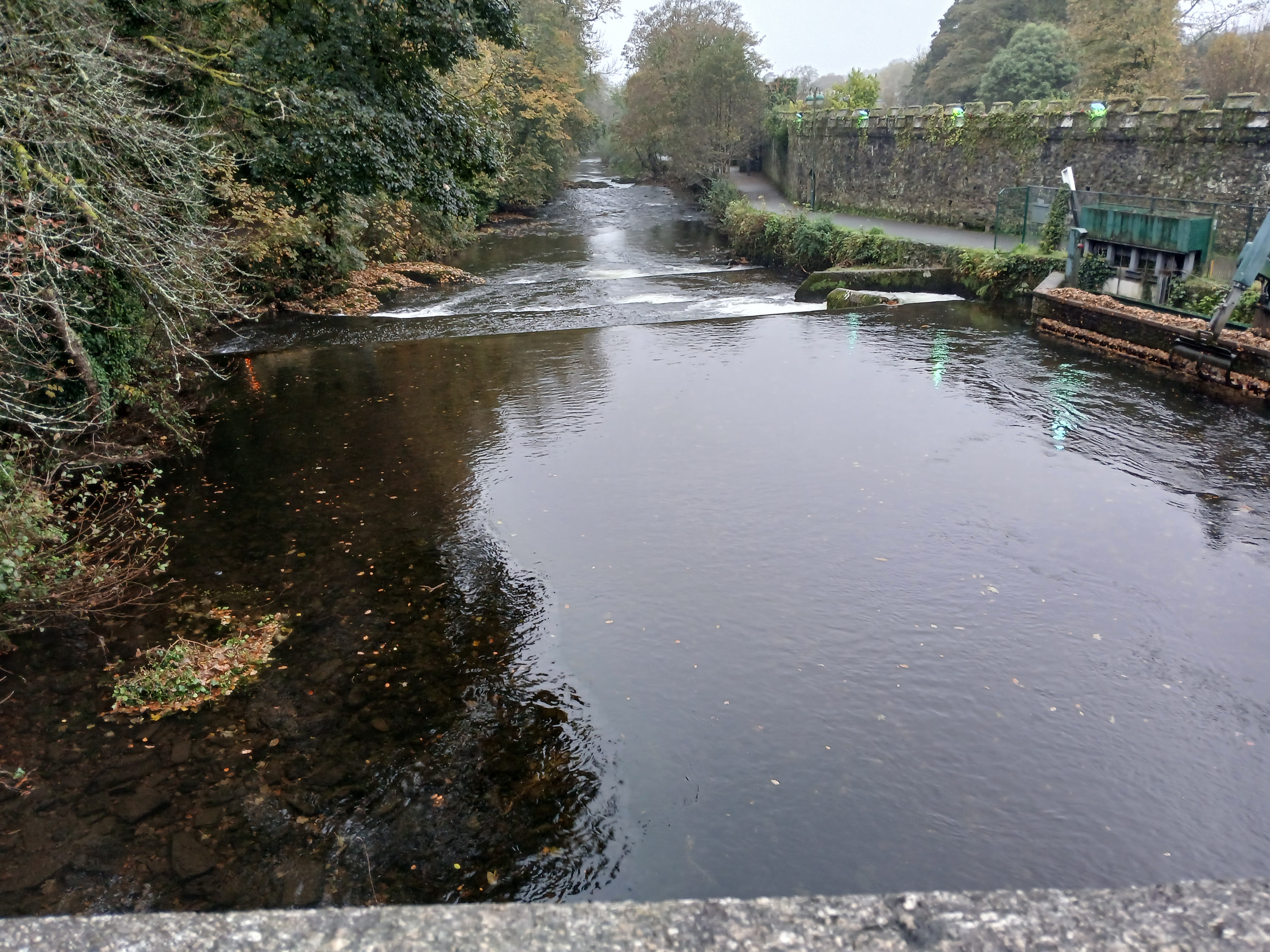
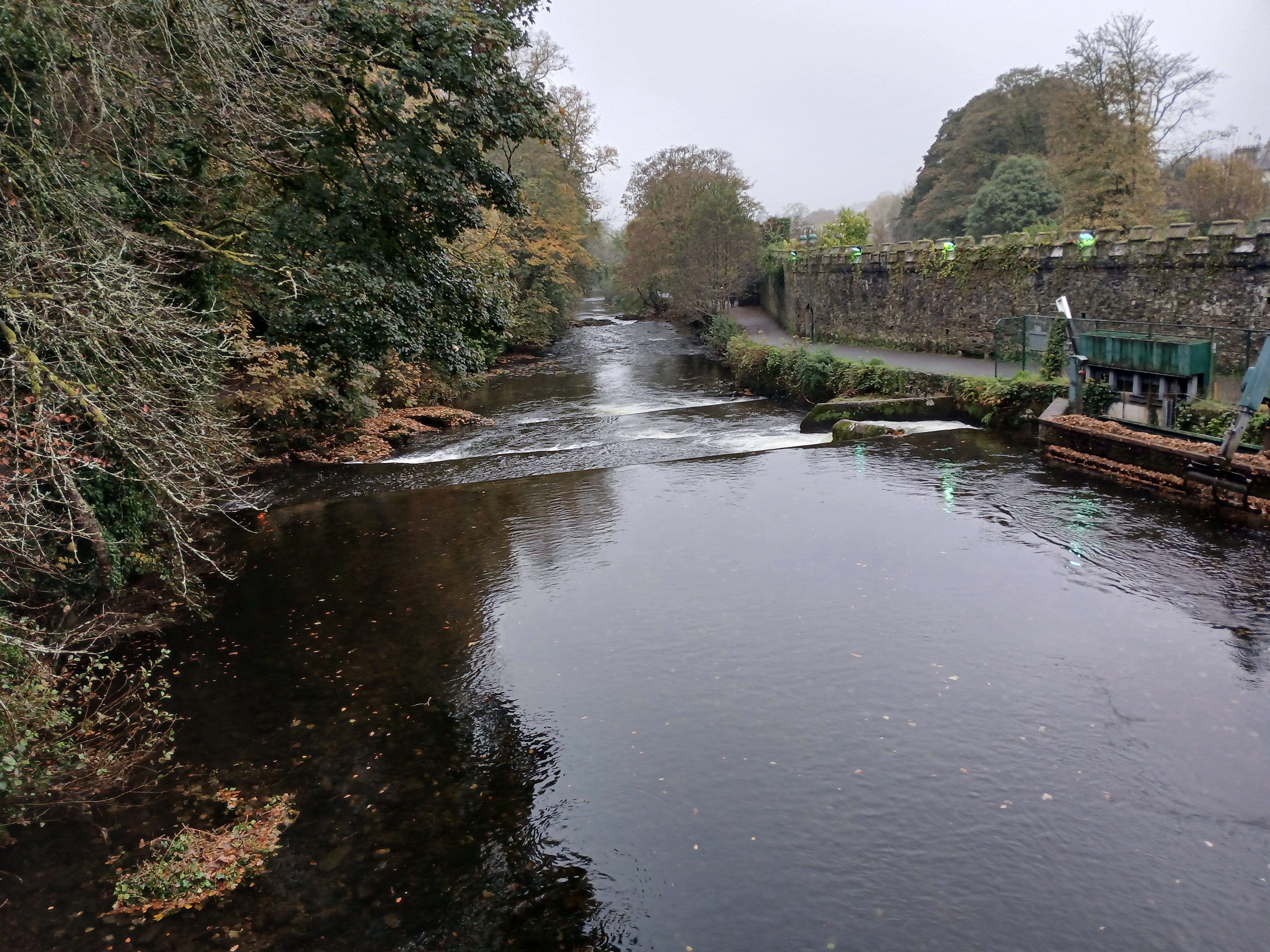
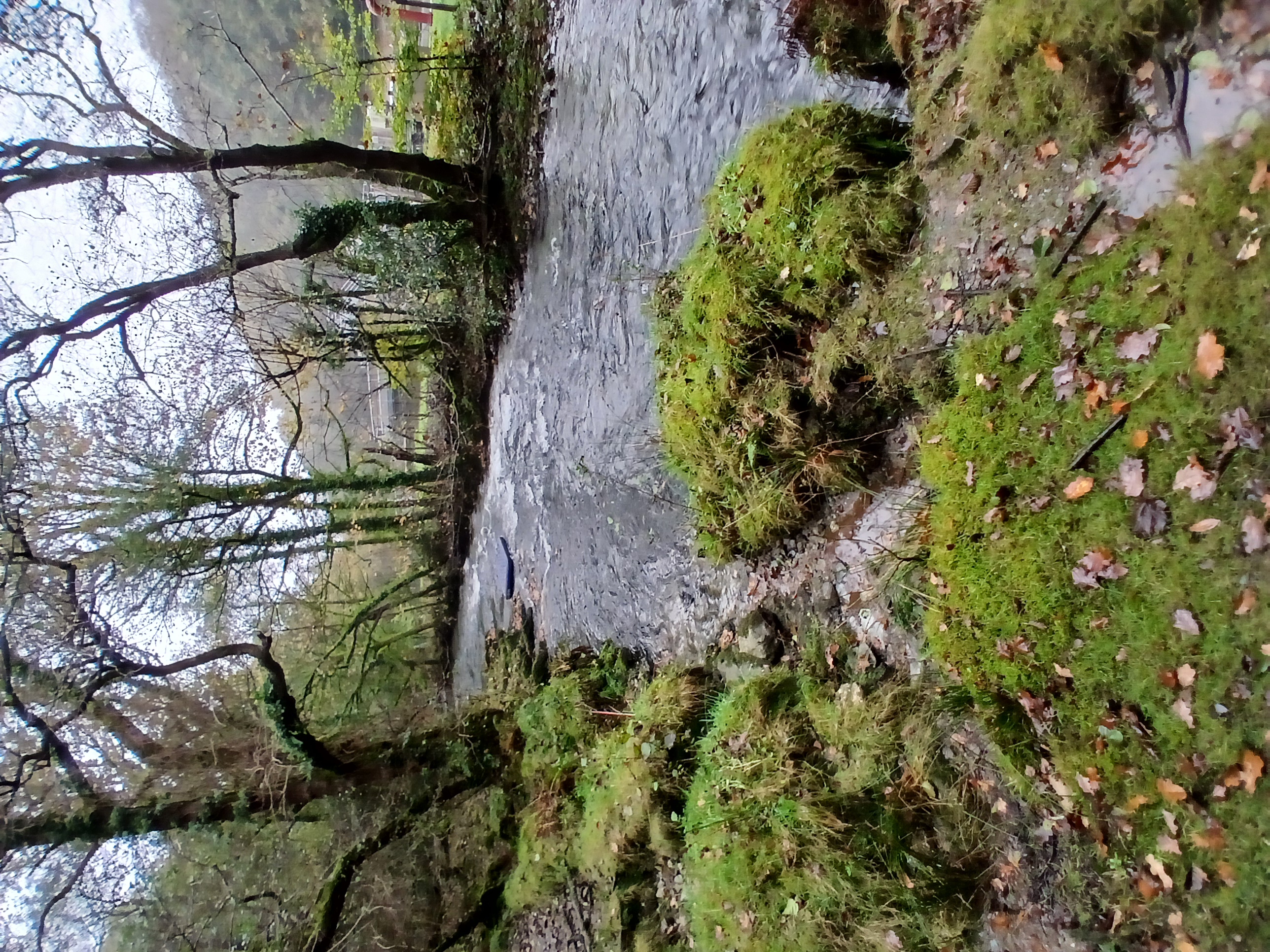
One might expect Dartmoor to introduce itself with granite and a distant tor: something suitably monumental, preferably attended by a gust of wind. The photographic record has other ideas. It begins with a river, hurrying over stones, and a blue rectangular object which has no obvious business being in the water. This is an unexpectedly good beginning. The world has never been particularly interested in following the itinerary we prepare for it.
The camera moves from the current to the bank. There are moss-covered hummocks, leaf litter, trees at improbable angles and a thousand small irregularities that no landscape architect would dare reproduce. Water takes the obvious route downwards; everything around it has reached its present position by a much less straightforward negotiation. There is a tendency, when faced with scenery, to look for the grand view. The closer view is often less willing to flatter us, and considerably more interesting.
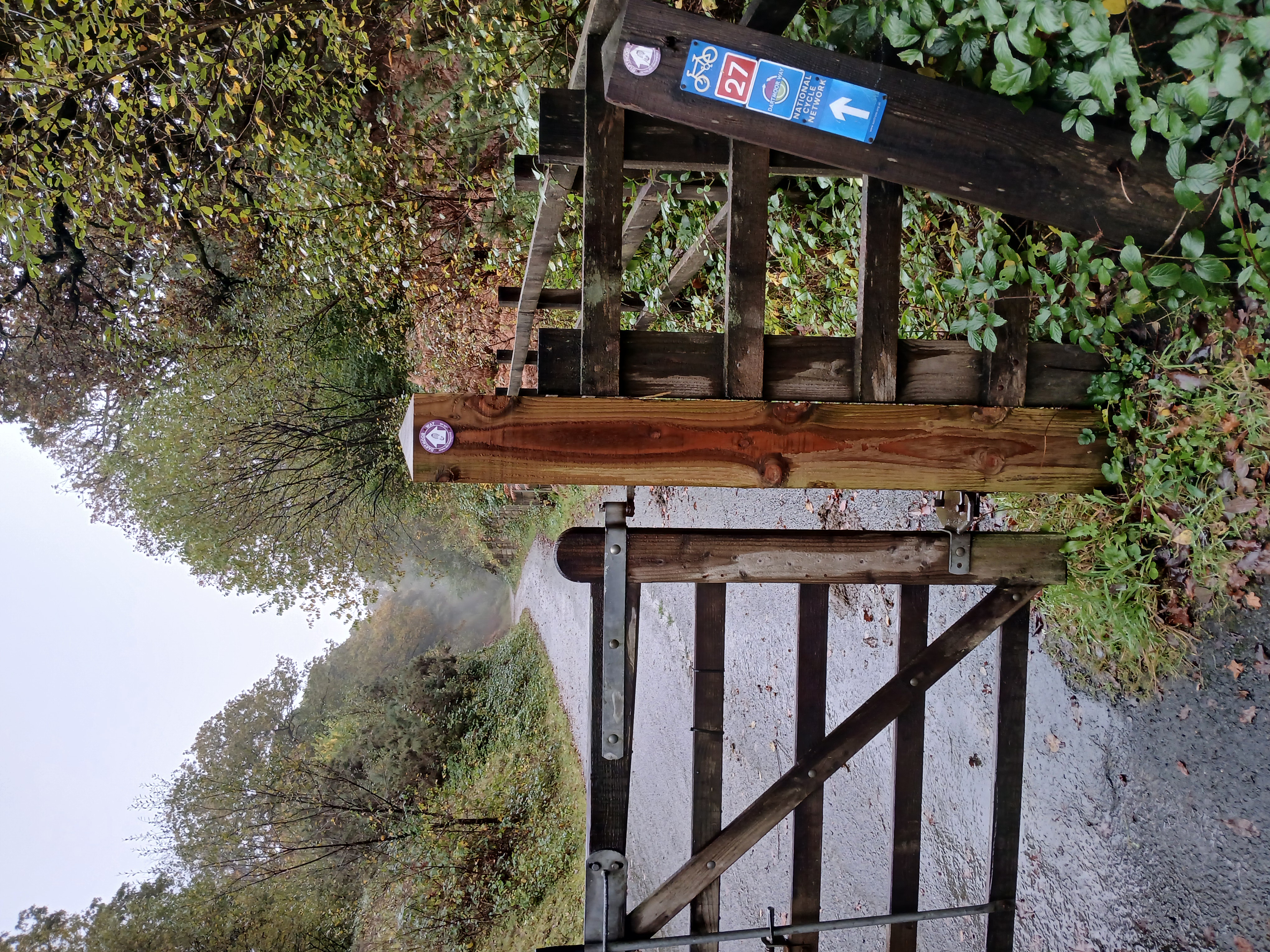
A wooden gate and a blue waymarker eventually provide a direction. They do not, thankfully, provide a schedule. Heraclitus, who understood that rivers are rather poor at repeating themselves, might have approved of this arrangement. A path tells us where we may go. It cannot tell us what deserves a pause. That remains our own responsibility.
A civilised argument with gravity
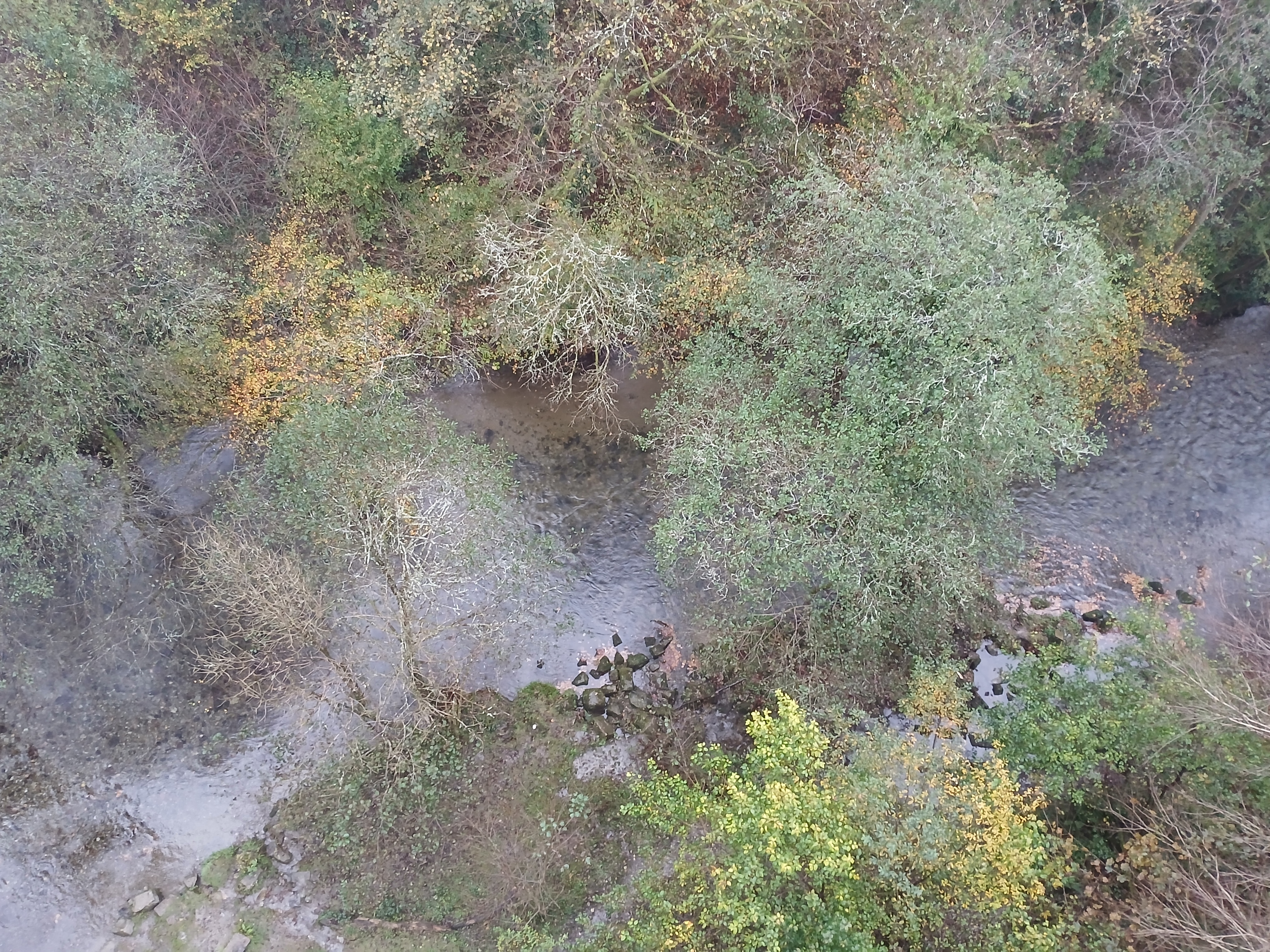
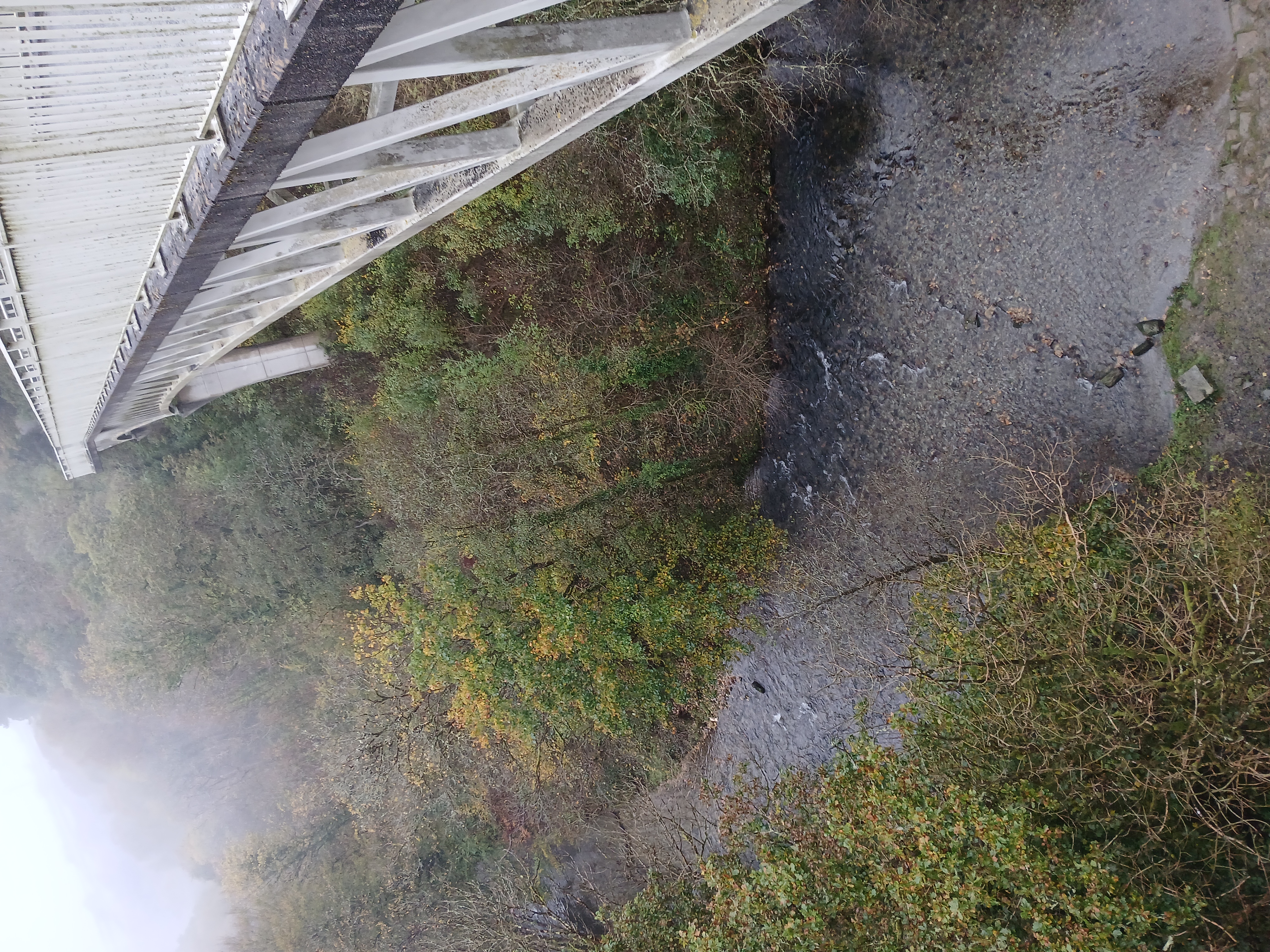
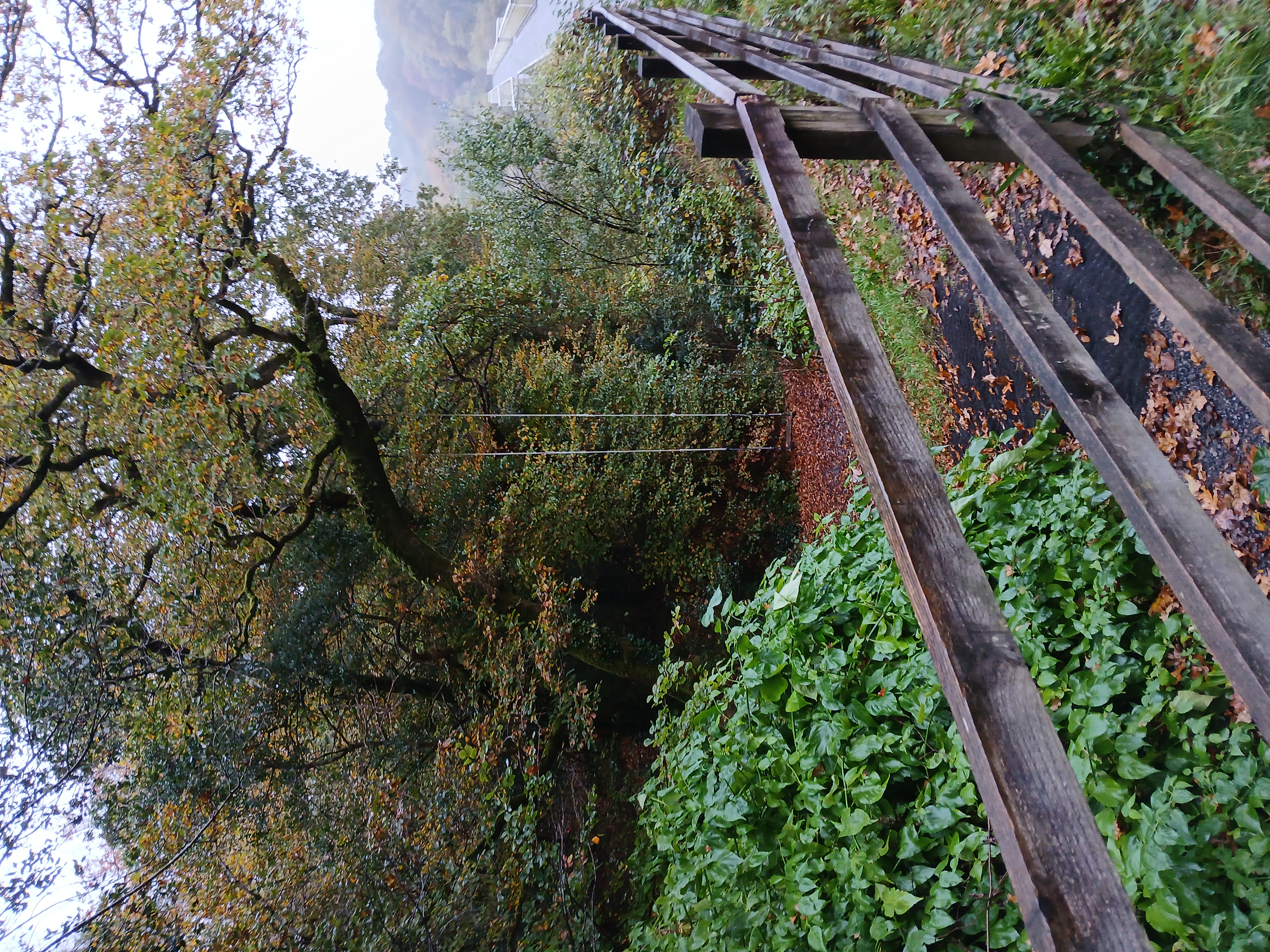
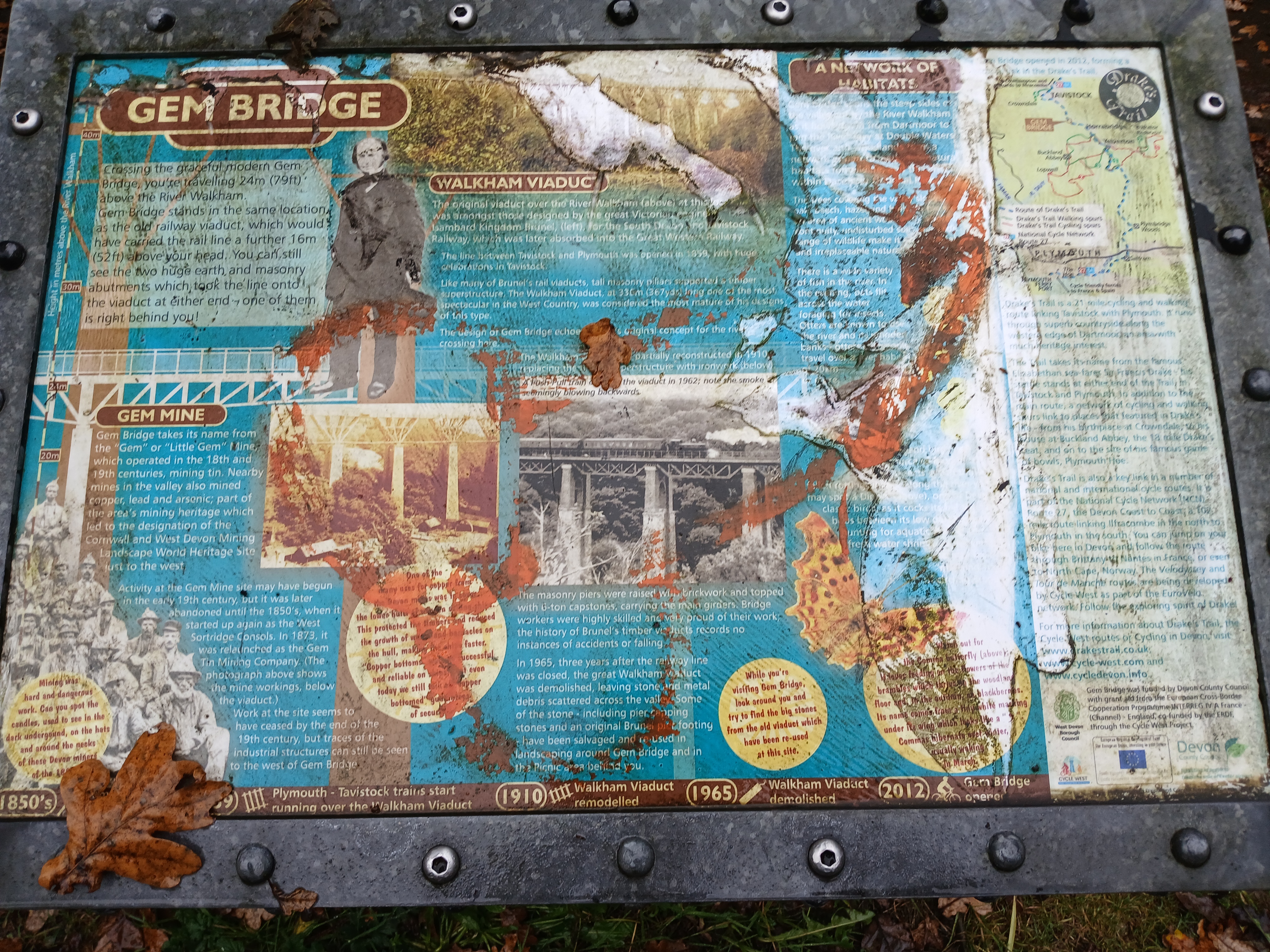
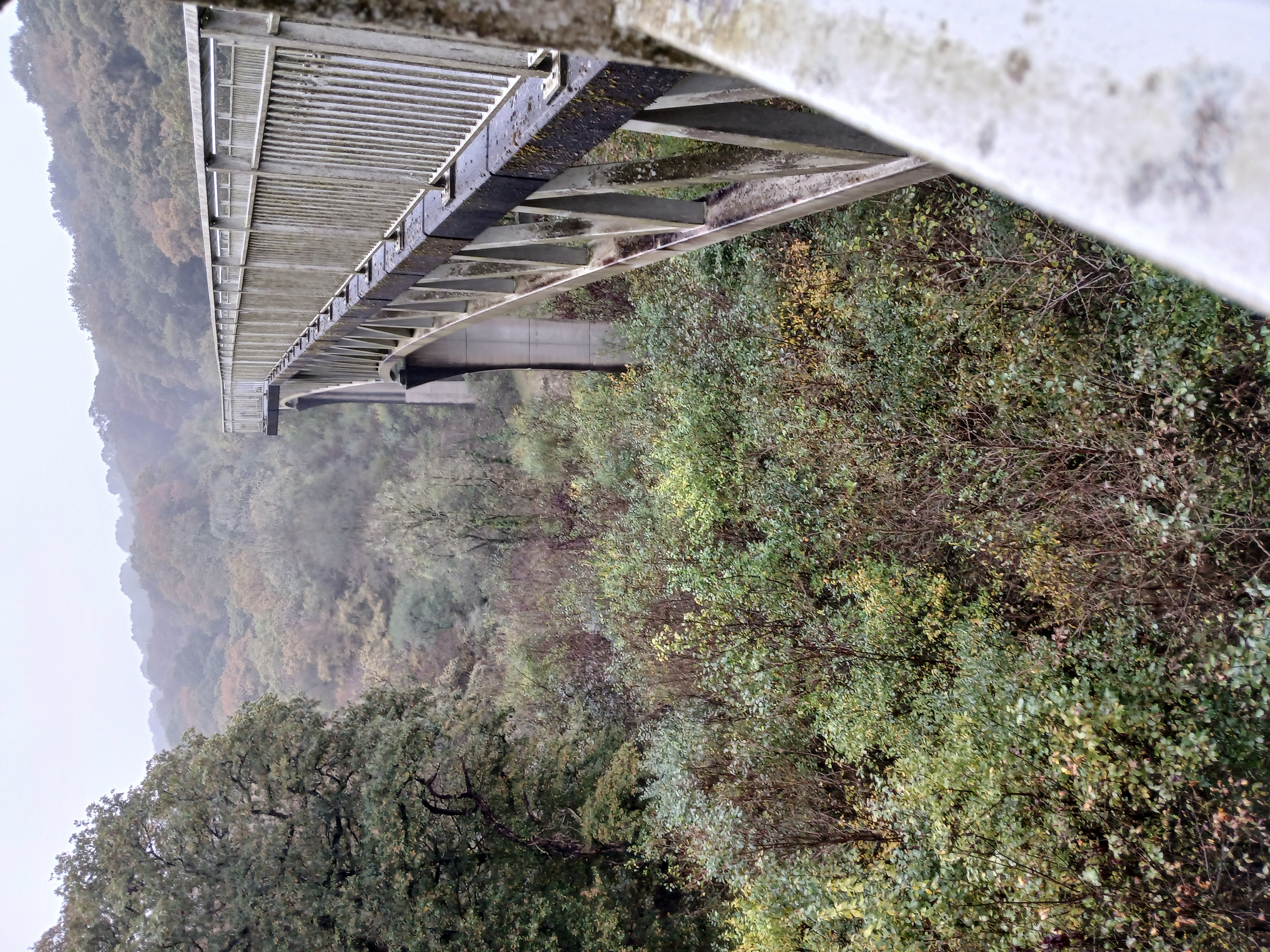
The ground drops away. Treetops, so accustomed to standing above us, appear suddenly below; the river becomes a silver suggestion far down in the valley. Then Gem Bridge enters the scene, drawing one long, level line across a landscape that emphatically declines to be level. It is a remarkable thing we ask of a bridge: to make the inconvenient geography of a place temporarily irrelevant.
Look along the crossing and it is almost ordinary: a path, some fallen leaves, a pair of railings, another bank ahead. Look over its side and the entire enterprise becomes gloriously improbable. Steel and geometry are doing the quiet work of keeping us in conversation with the far hillside. We call this infrastructure, an admirably dull word for an act of sustained human imagination. A bridge is not the defeat of the valley. It is an agreement with it, reached by engineers.
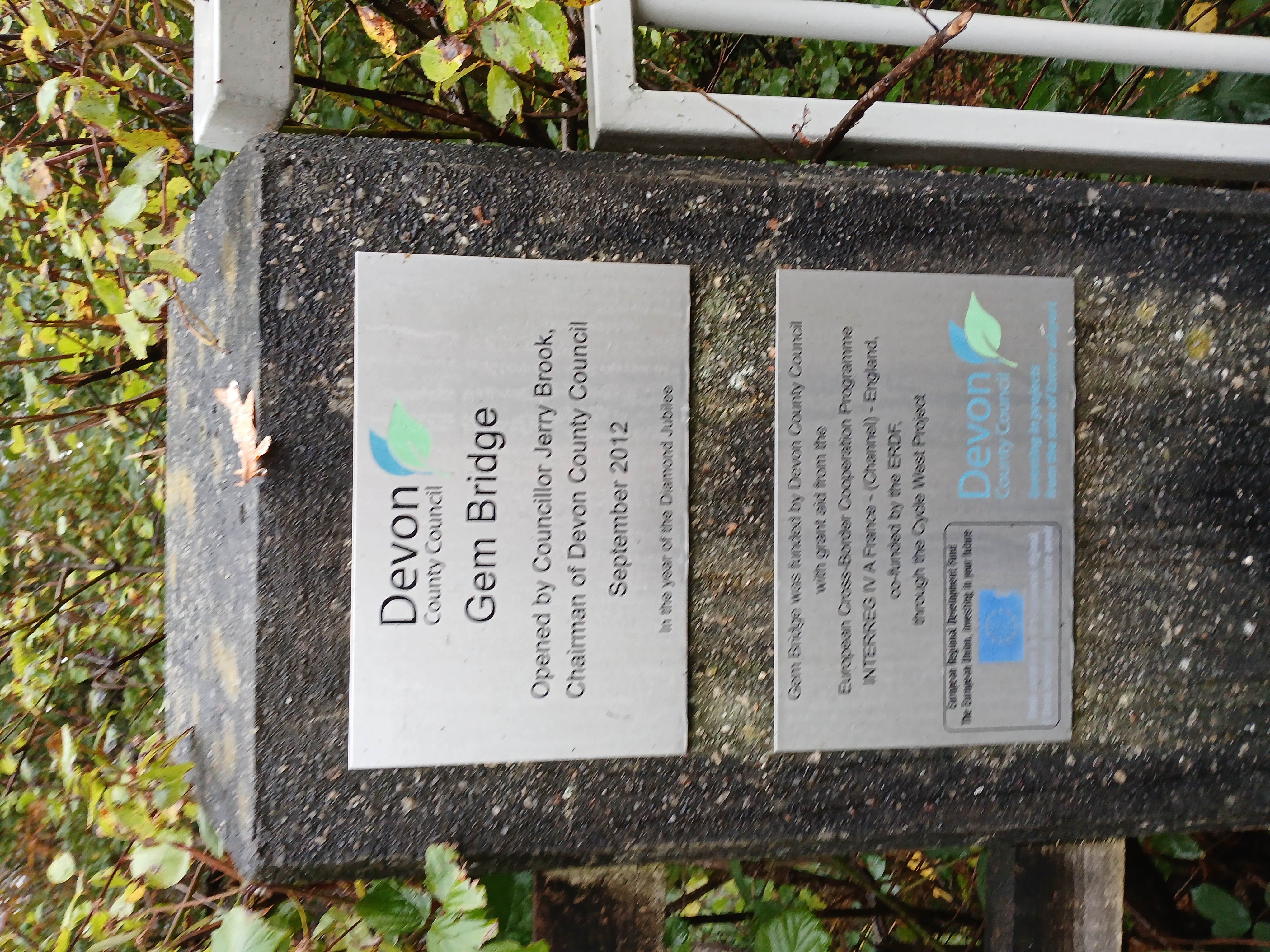
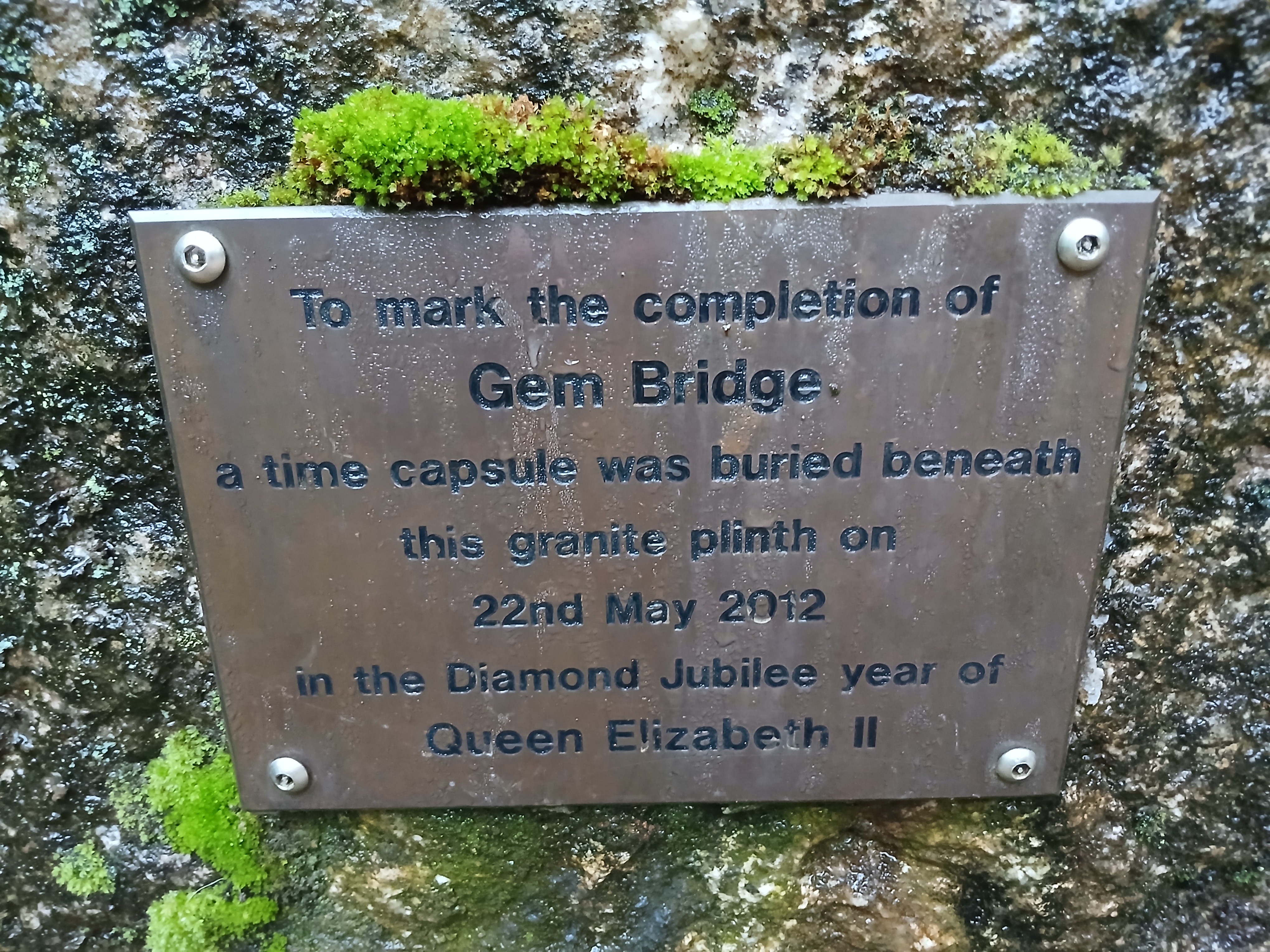
A plaque records Gem Bridge’s opening in September 2012. Another marks a time capsule buried on 22 May of that year. There is something rather touching about this: we build a crossing to overcome a distance in space, then bury a message in the hope of overcoming one in time. The moss has begun colonising the stonework already. It may be the only participant entirely indifferent to the opening ceremony.
An appointment with the dark
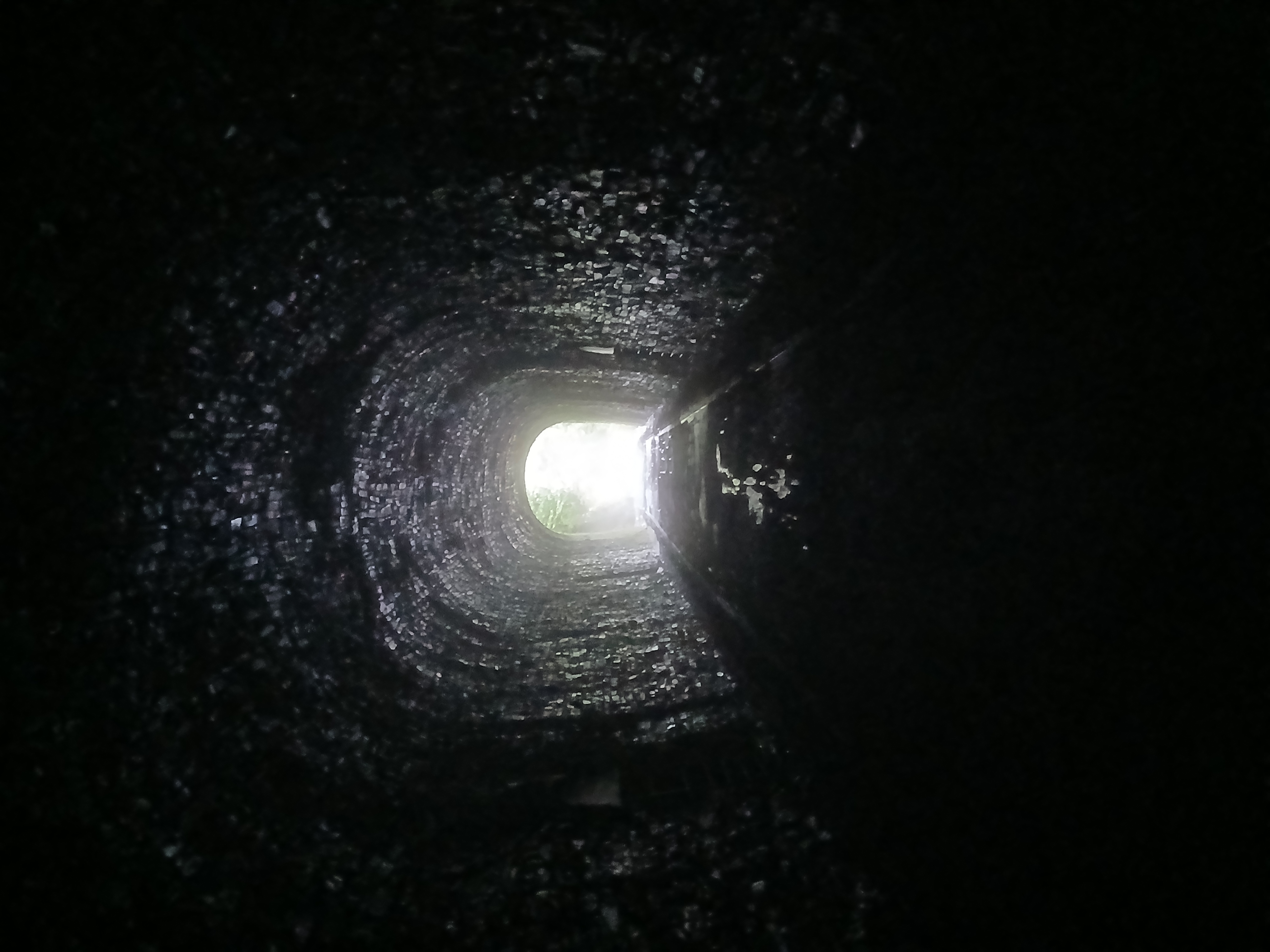
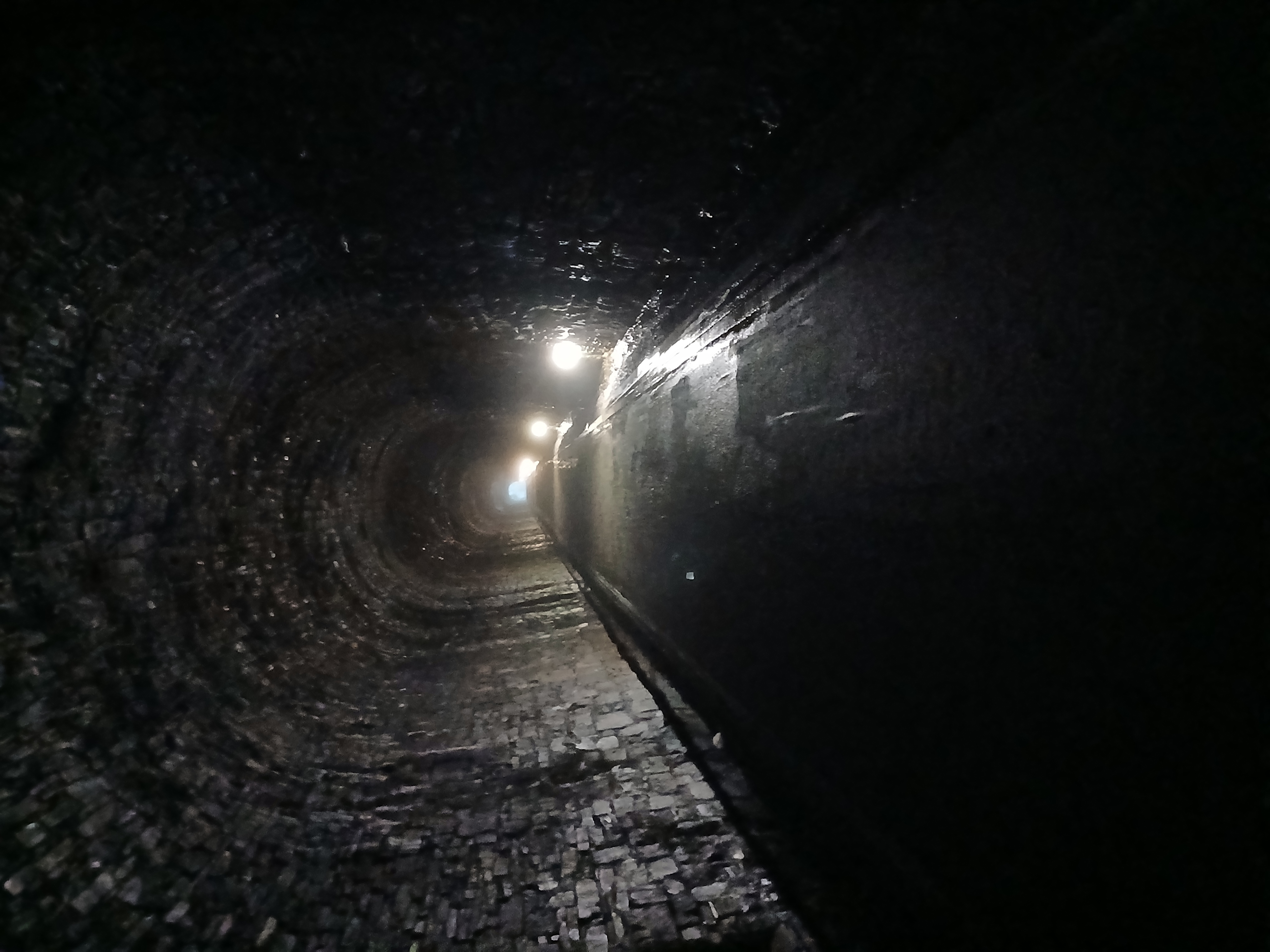
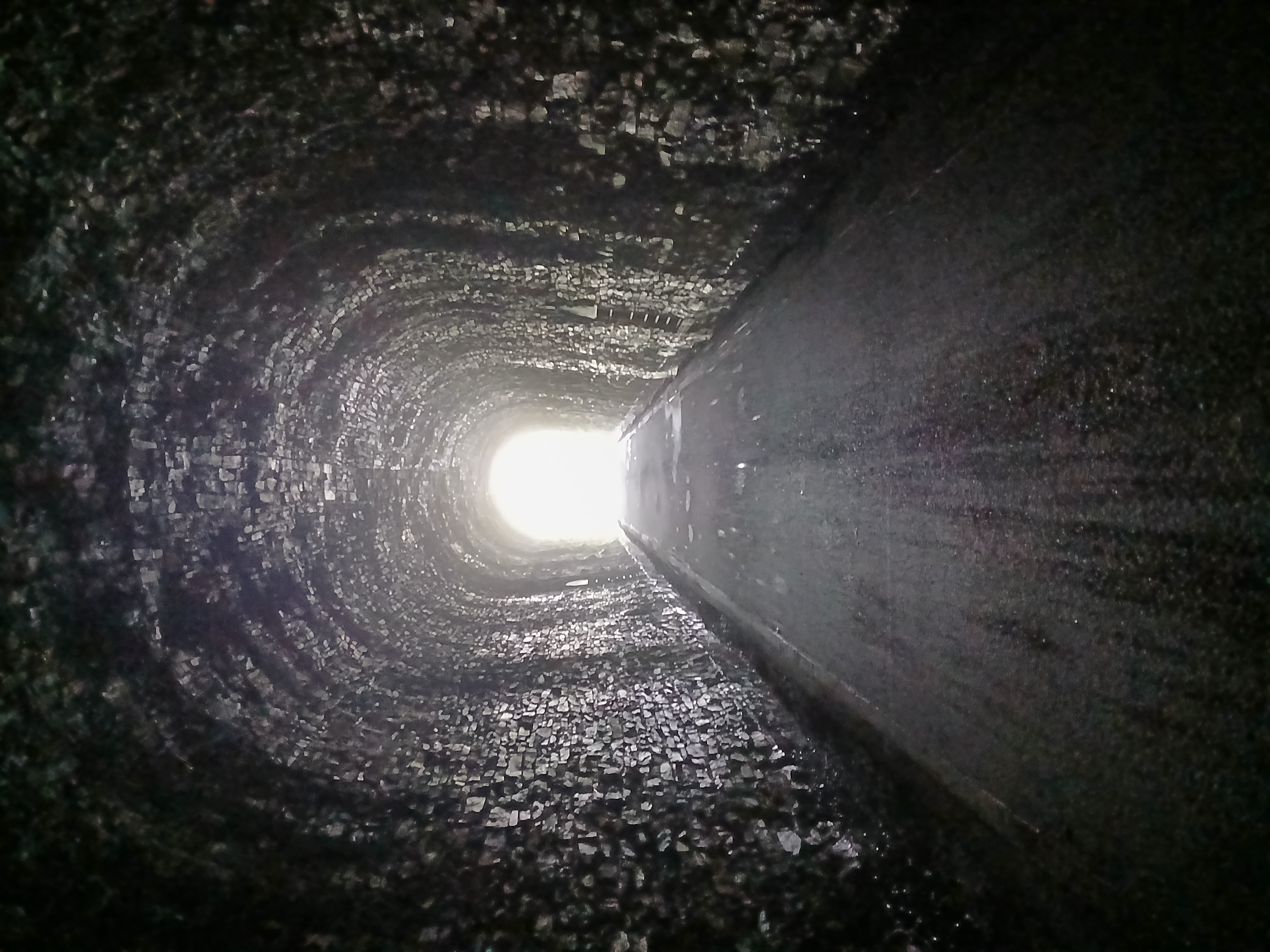
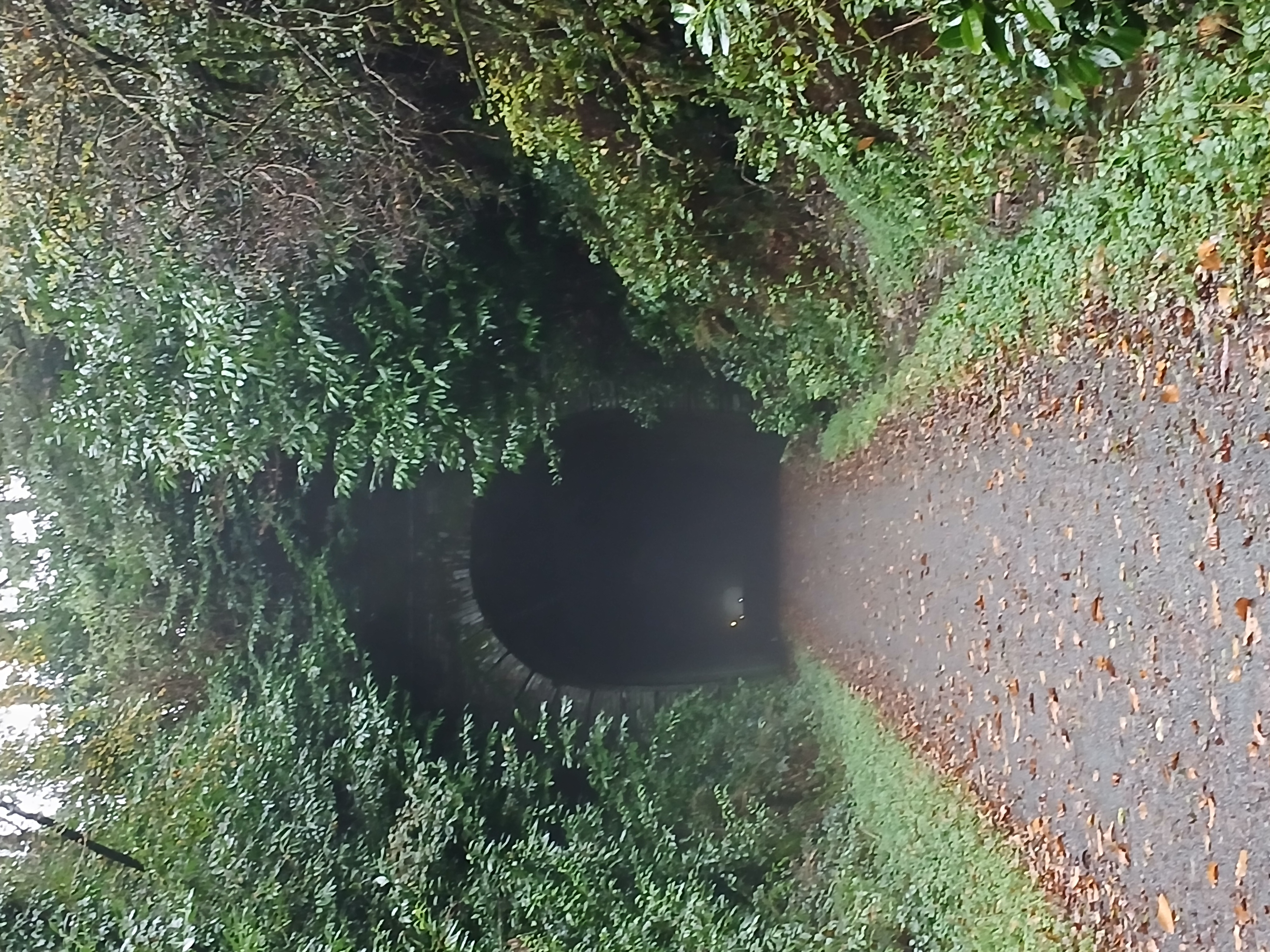
A bridge carries us above what stands in the way. A tunnel offers a more intimate arrangement: through it. The approach to Grenofen Tunnel is unassuming, all wet leaves and familiar greenery, until the path vanishes into an arch of blackness. The entrance seems to ask a simple question. How certain must we be of what lies ahead before we are prepared to proceed?
Inside, the rules of vision change. At first the distant opening is little more than a bright coin at the far end of the world. Then the stonework begins to reveal itself: rough joints, damp surfaces, little points of light travelling along the passage. In the short film the tunnel is not an abstraction but a progression, a few seconds of movement into a space that grants its details reluctantly. We have not lost the landscape. We have merely exchanged its immediate abundance for a narrow allowance of light.
There is a kind of discipline in such places. The eye must adjust; the mind must resist inventing what it cannot yet see. Darkness, after all, is not proof of emptiness. It is simply a reminder that observation has conditions, and certainty ought to be earned. Somewhere ahead is daylight. For the moment, it is enough to keep going.
The republic of small things
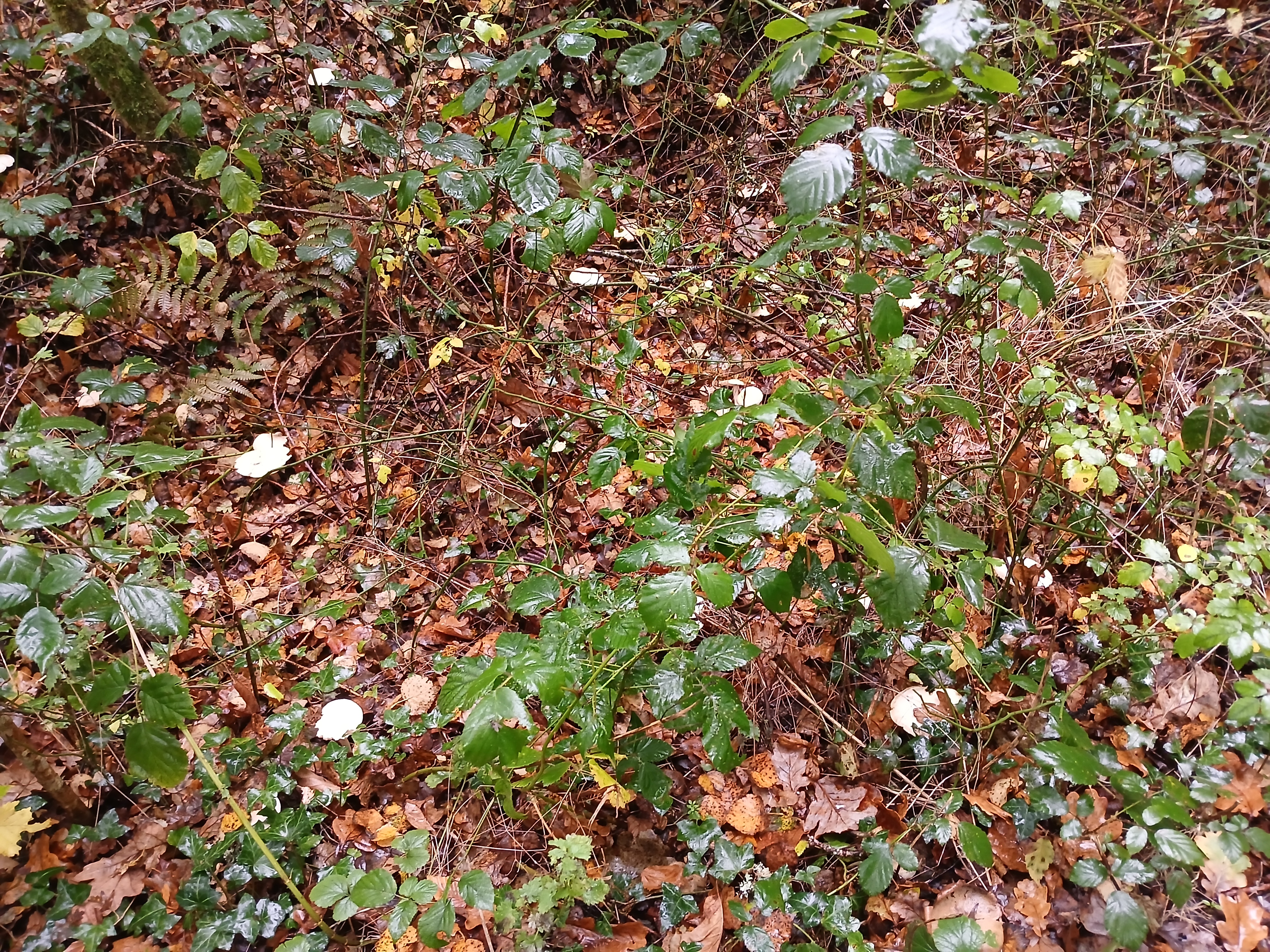
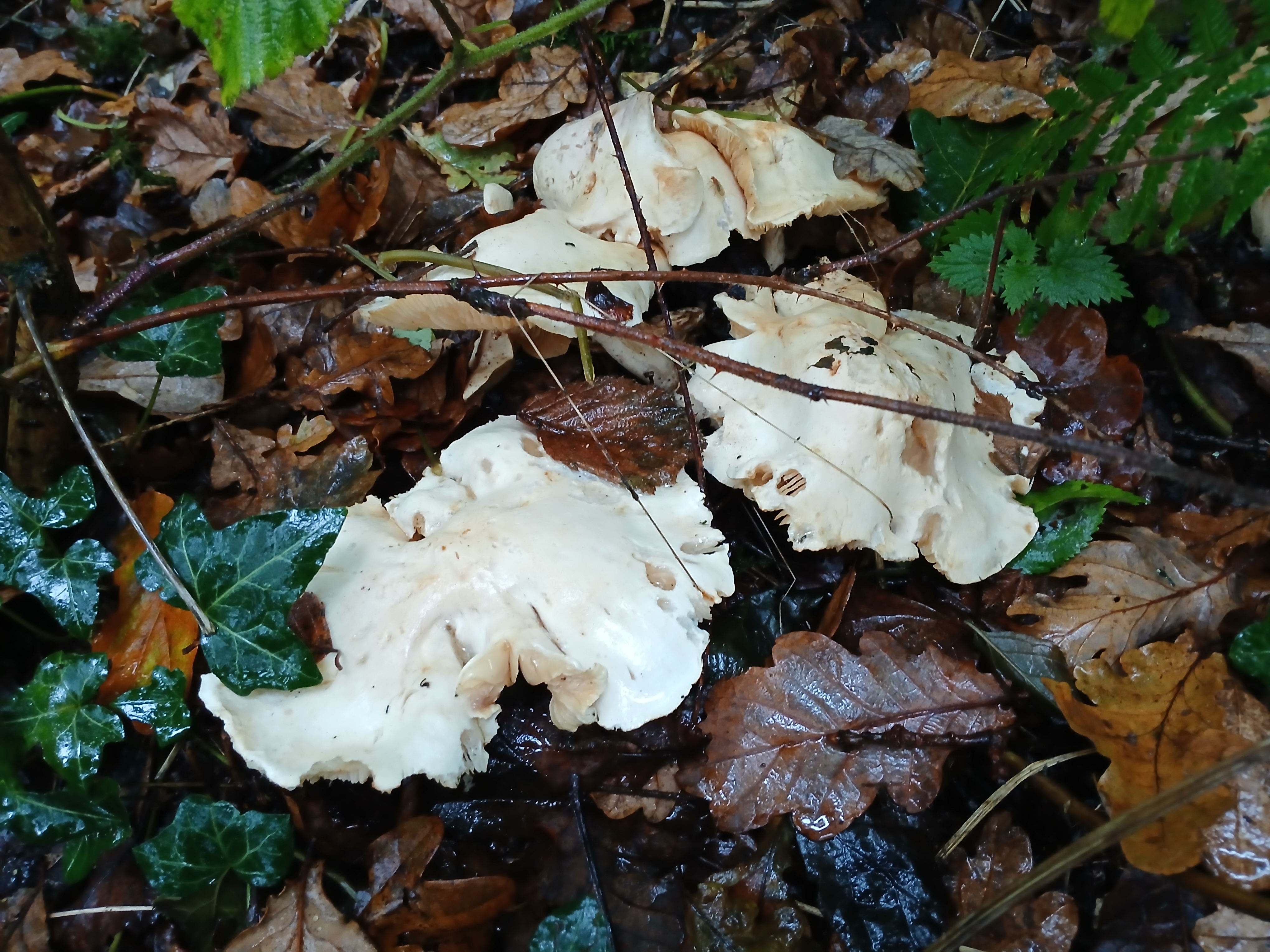
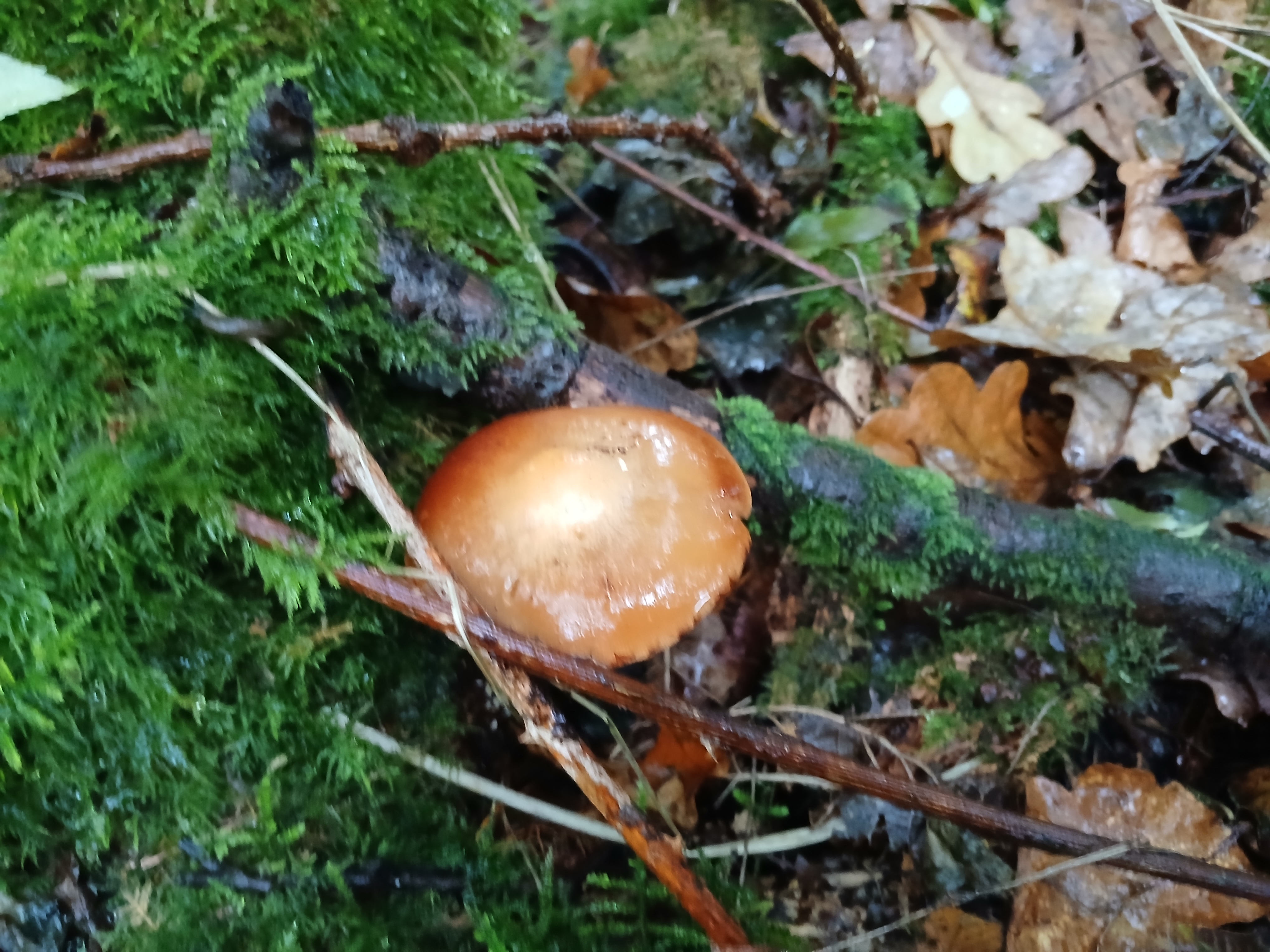
After the considerable engineering of bridge and tunnel, the next interruption is accomplished without so much as a planning application. The woodland floor offers up pale, ragged-edged fungi among the leaves, and then a single glossy brown-orange cap beside a mossy branch. There is no ceremonial approach, no information board, and certainly no time capsule. Yet here is another entire world, present all along and perfectly capable of being overlooked.
A mushroom is the visible announcement of an organism whose larger business may be taking place inside wood or beneath the soil. It is tempting to attach a name to every cap. Better, on this occasion, to resist. A photograph of the top alone does not settle the matter: the underside, the stem, the substrate and other characters have their say. Nature is not improved by our confidence when our evidence is incomplete.
But the absence of a Latin label is hardly a failure of the expedition. The point is not to collect certainties like souvenirs. It is to notice an exquisite arrangement of colours and textures at ankle height, and to recognise that the machinery of life conducts most of its affairs without ever consulting us. One may spend millions spanning a valley, only to find oneself brought to a halt by a fungus. Quite right too.
The town that remembers
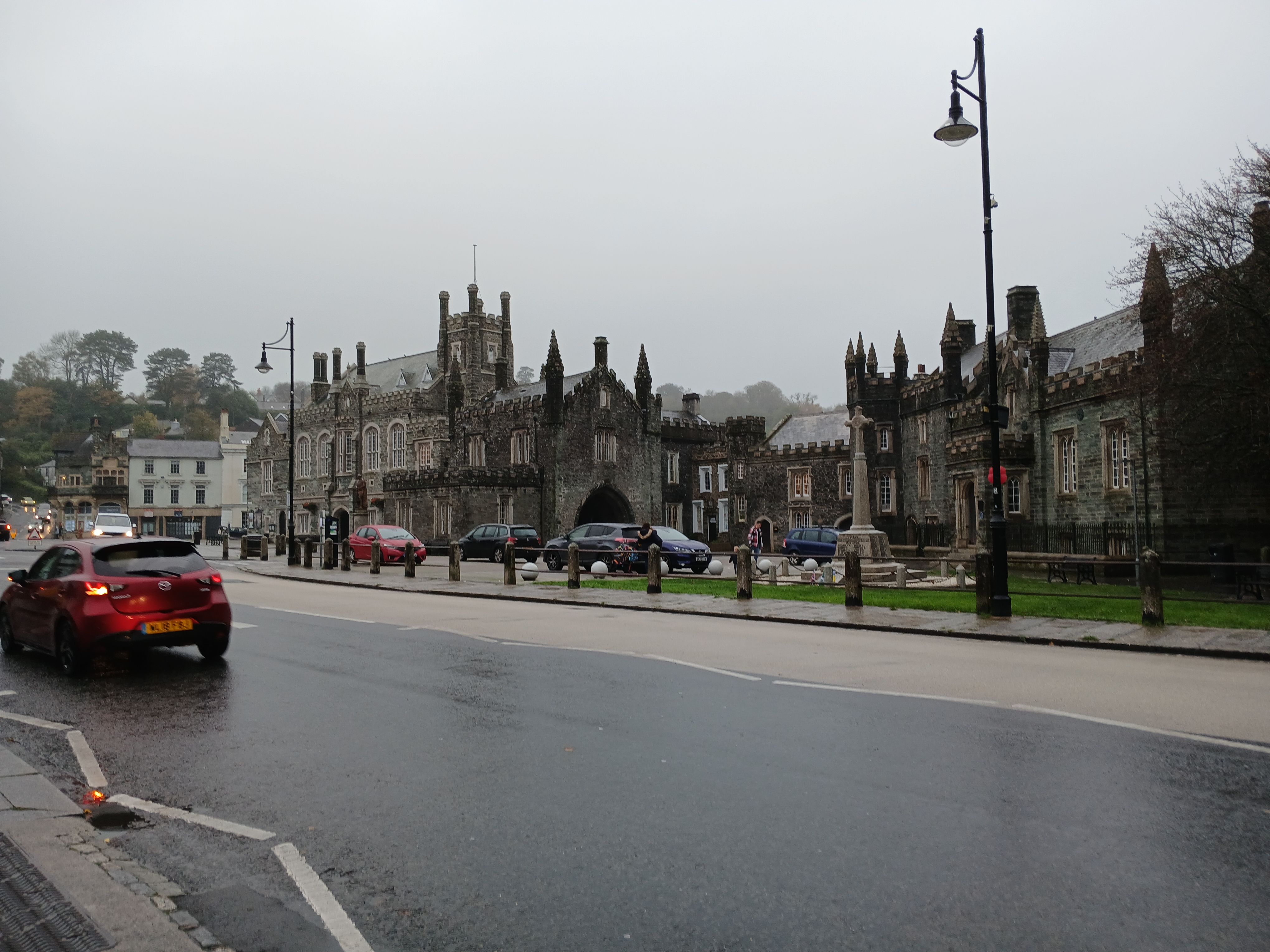
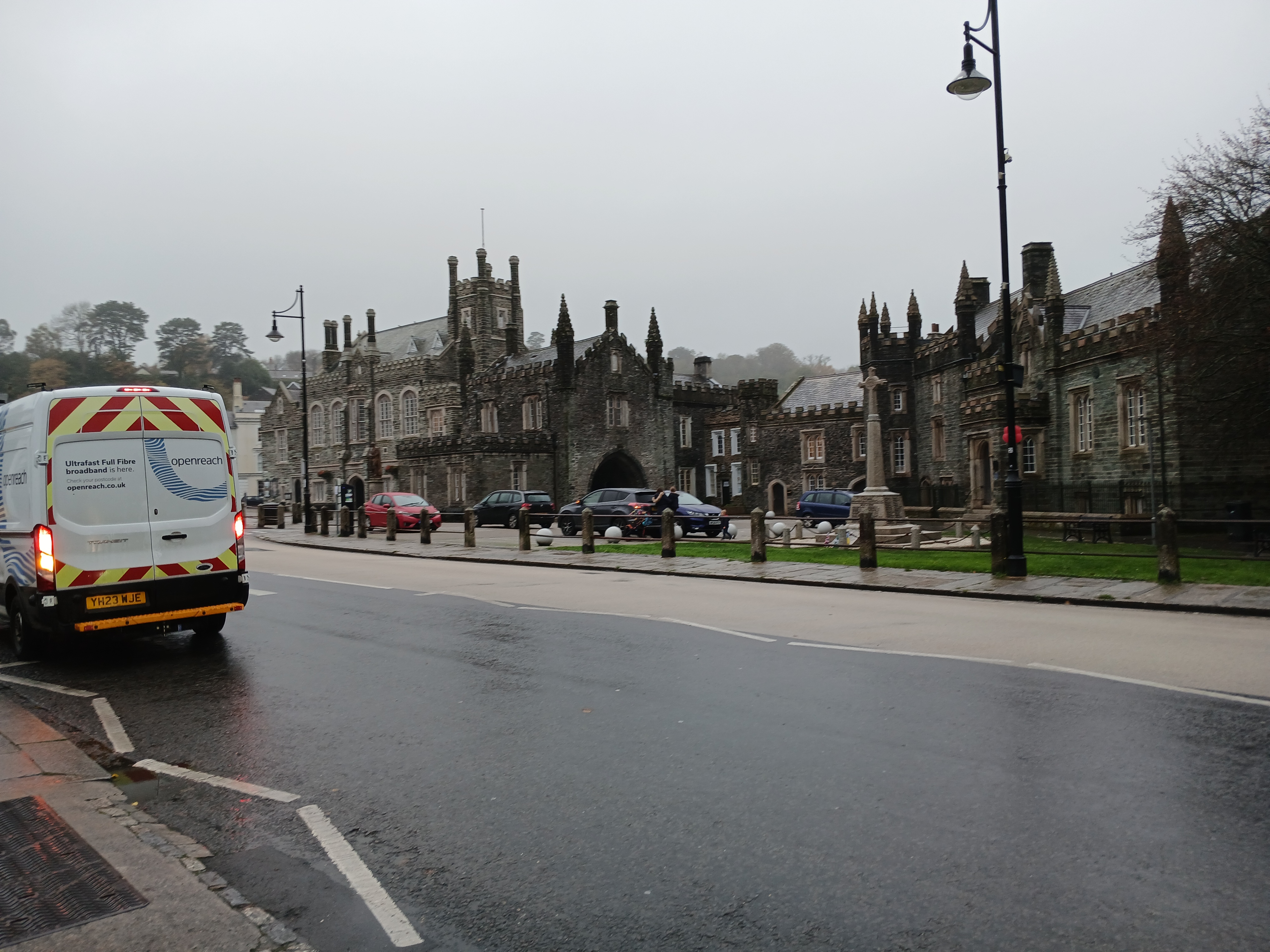
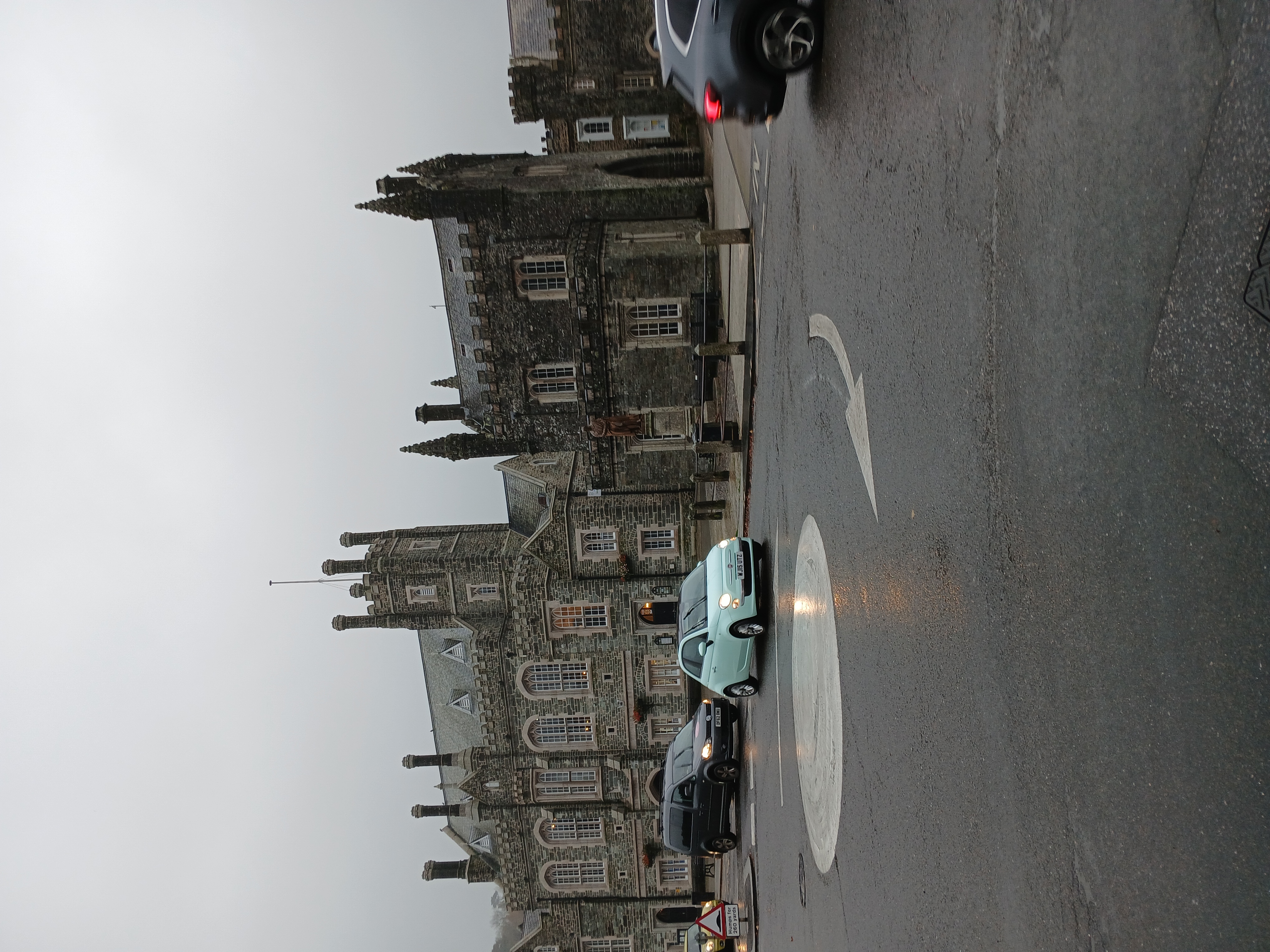
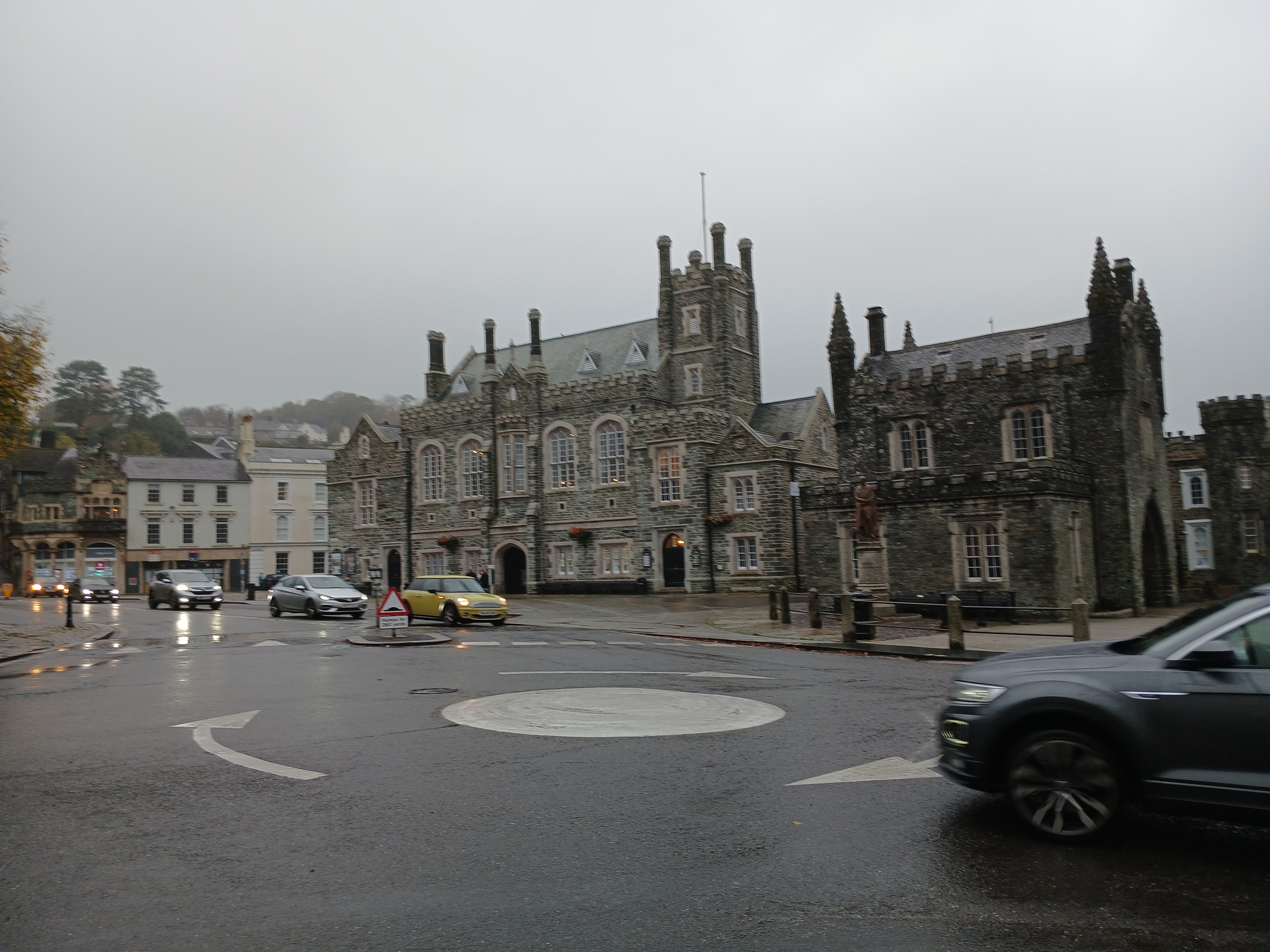
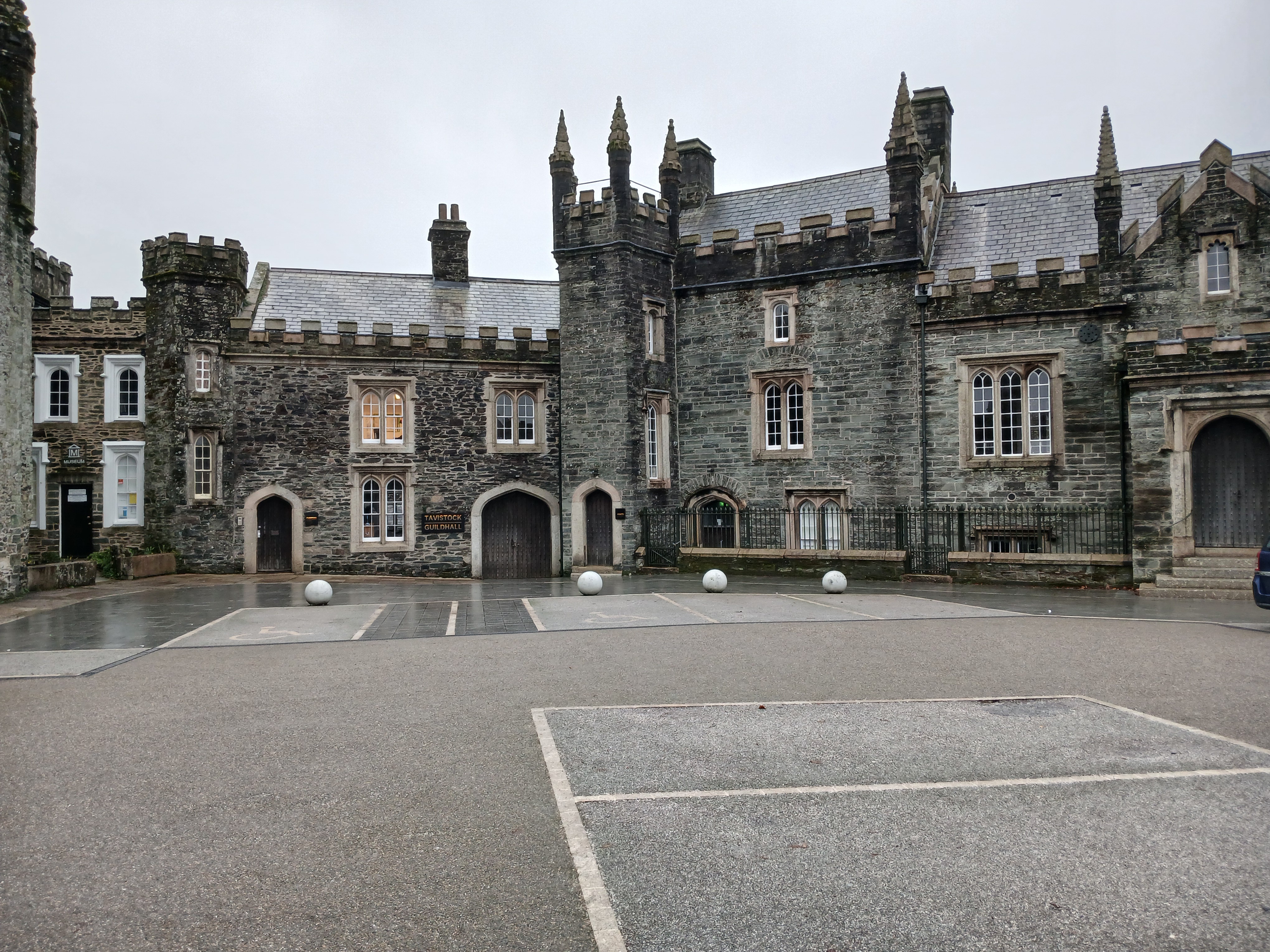
Water makes a final appearance before the photographs return to the streets of Tavistock. Its surface darkens beneath the trees and breaks into a thin white line across the channel. Then come wet roads, passing vehicles, directional arrows and substantial stone buildings that seem rather less hurried than the traffic in front of them. We have exchanged the woodland’s many little routes for a town’s official instructions on how to proceed.
Tavistock wears its history in masonry. The Guildhall complex, with its former civic purposes and layers of earlier fabric, is not a building one understands at a glance. Nor should it be. A town is an accumulation of decisions, ambitions, alterations and occasional second thoughts. Its stones do not become more truthful merely because they are old; they become more interesting when we ask what people once needed them to do.
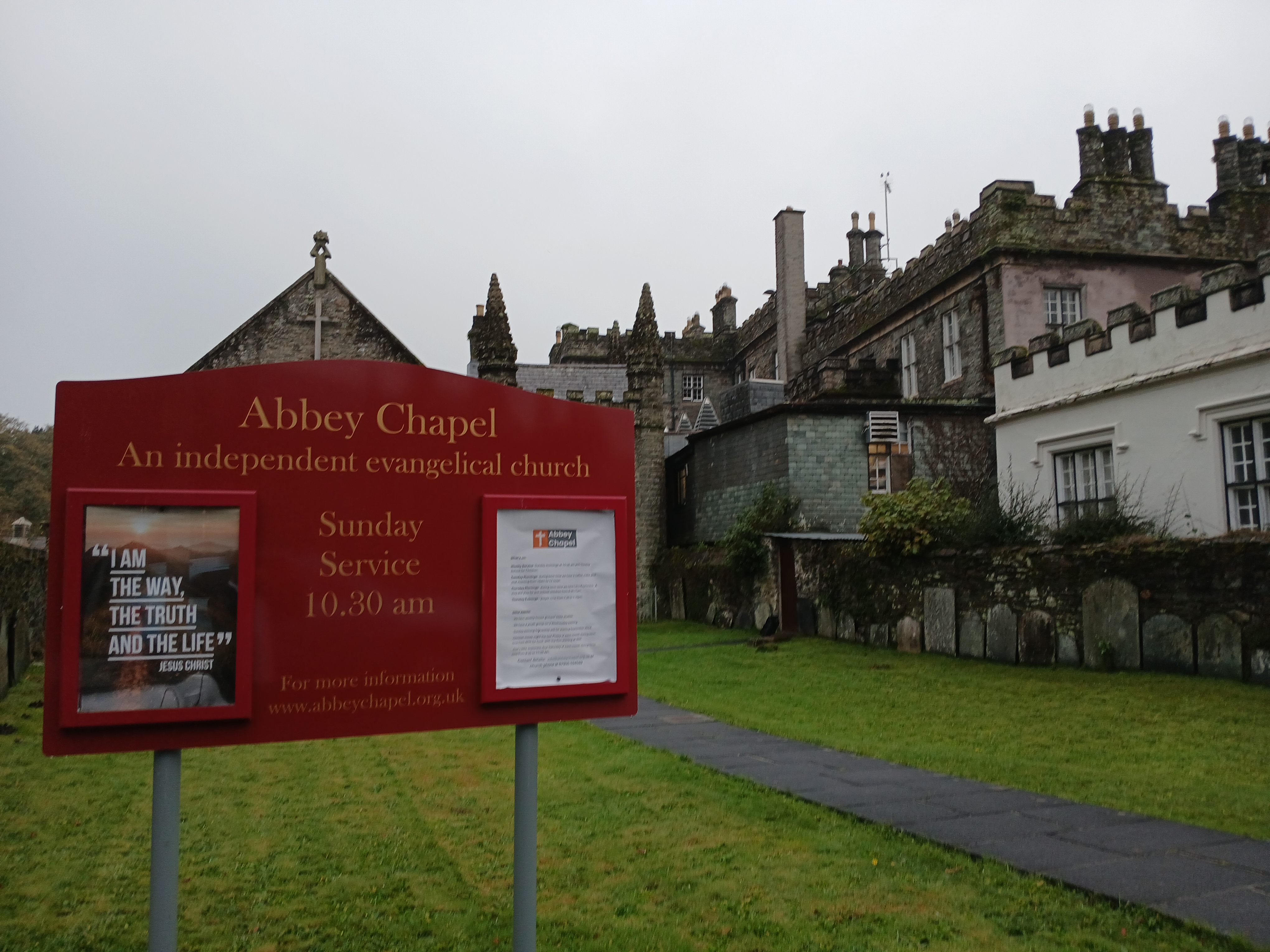
The modern road system, meanwhile, moves vehicles past old façades with a confidence that will doubtless amuse future generations. An Abbey Chapel sign contributes an uncompromising splash of red. In a quieter square, white stone spheres and empty paving take over the business of directing the eye. The river, the crossing, the tunnel and the street all organise movement in different ways. But the past has its own current, and here it runs very close to the surface.
On the endurance of standing still
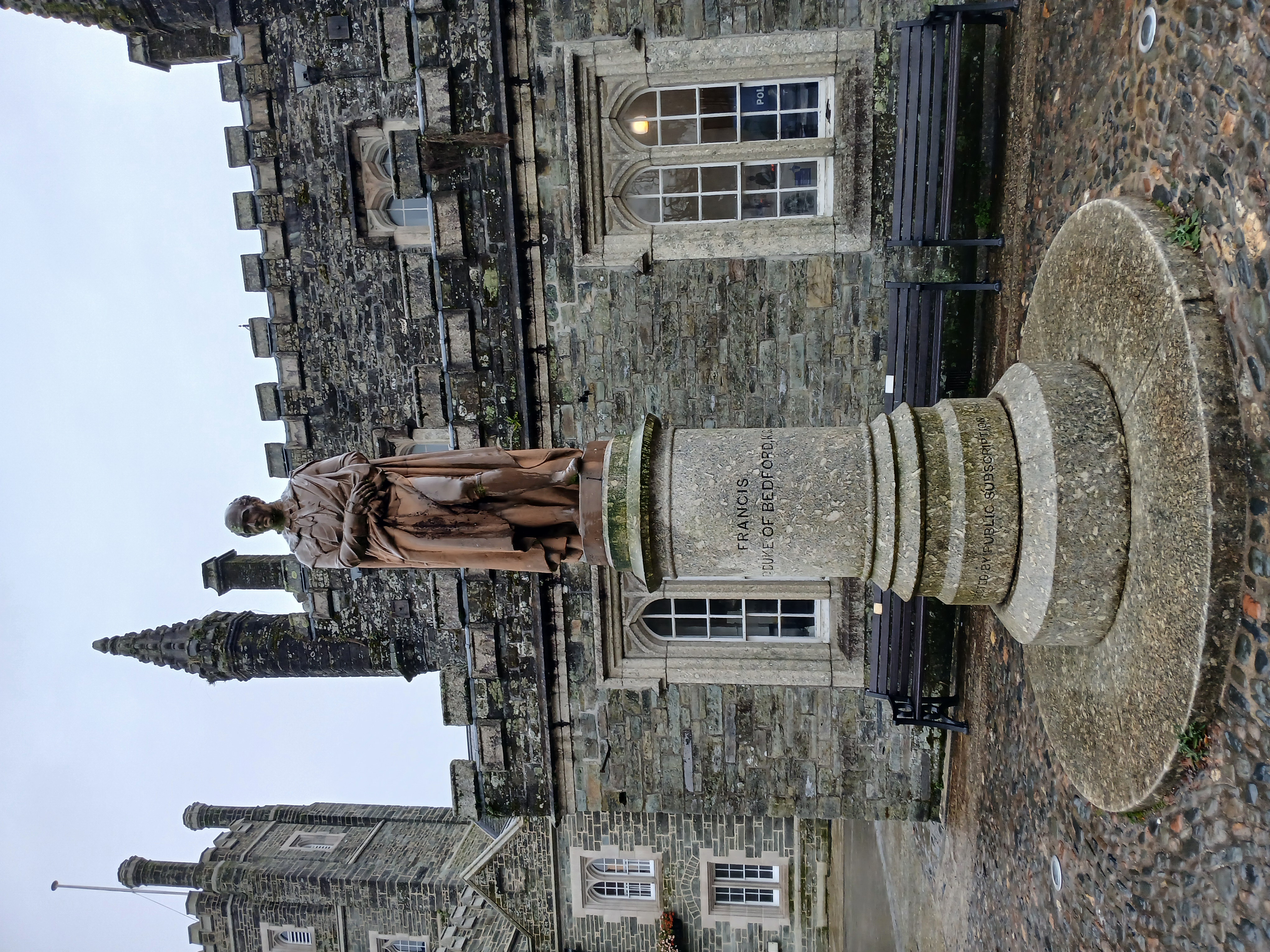
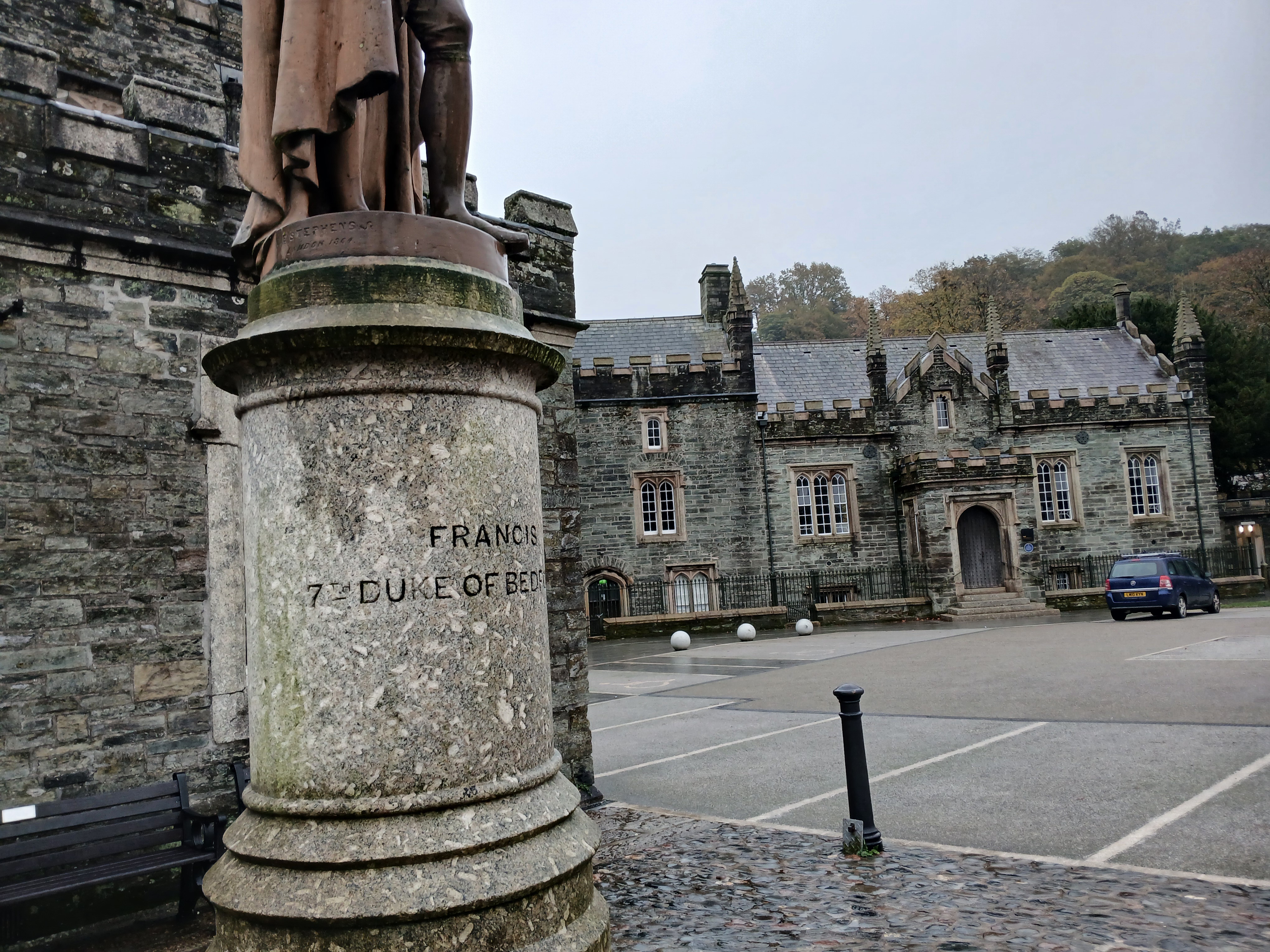
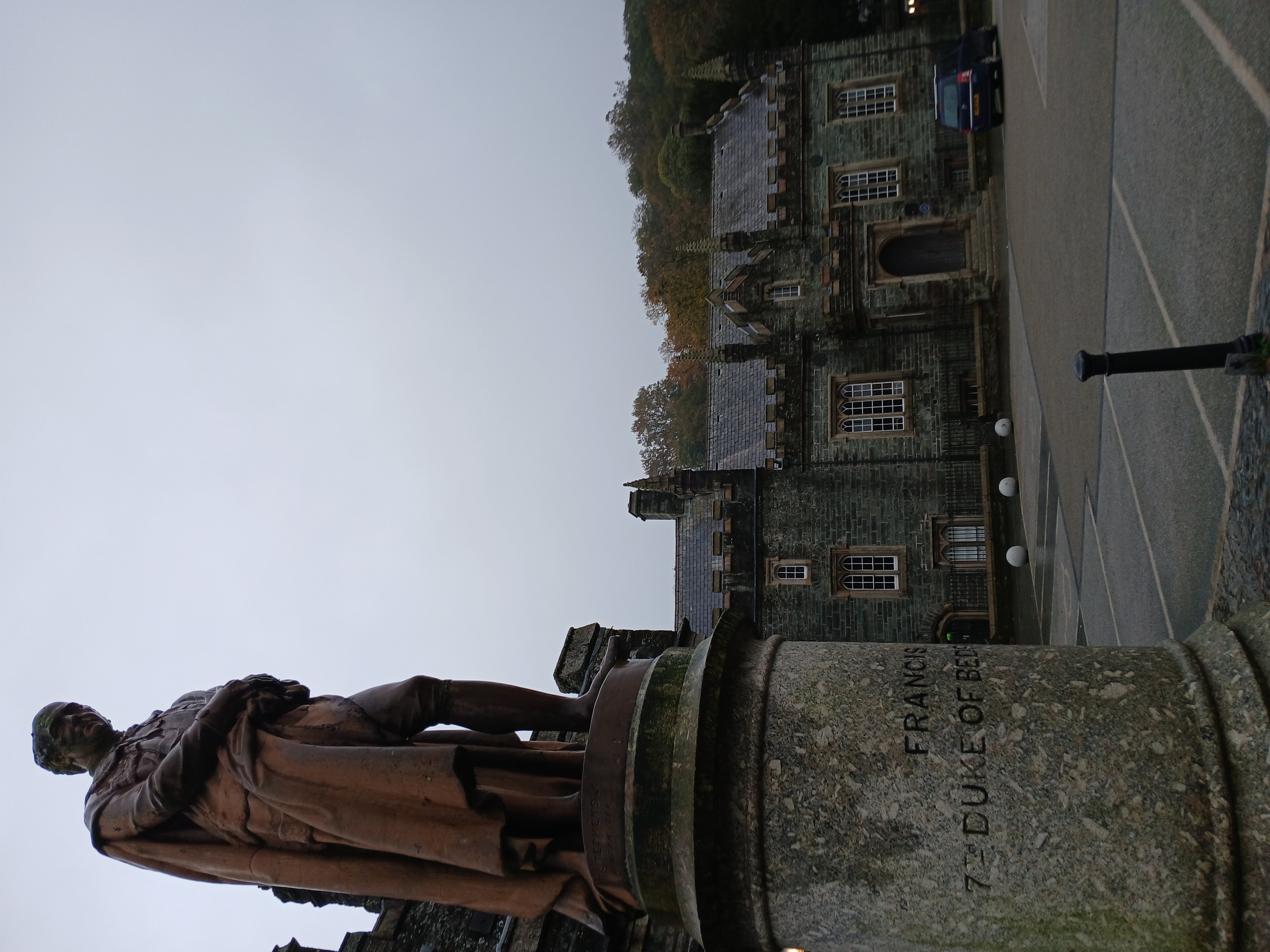
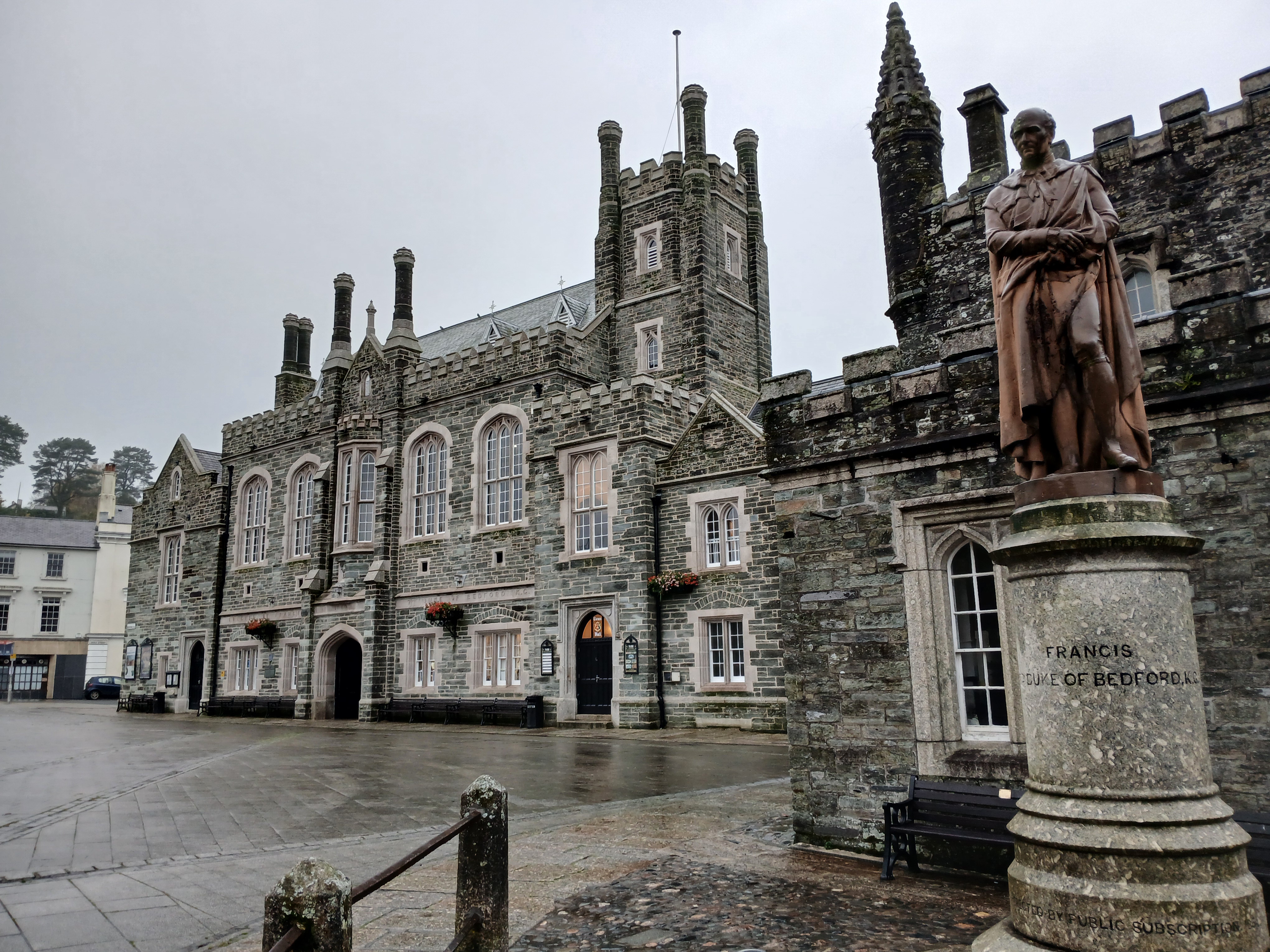
And at last, Francis, seventh Duke of Bedford, standing in Guildhall Square. The photographs approach him from several angles: full figure, buildings behind, inscription close at hand, and finally a view upwards into the pale sky. The Duke, who has had ample opportunity to practise stillness, offers no comment. A monument is an unusual sort of conversation. One party has been given a pedestal; the other gets to move about and decide what it means.
The material of the statue has its own history, connected, according to the historic record cited in the original field page, with metal from local mines. That makes the figure something more than a portrait. The ground has, in a sense, been persuaded to remember a man. Yet the photographs make another point just as clearly: move your feet a few paces and the relationship changes. The Duke is no longer simply an object against a building. He becomes part of the town’s arrangement of power, labour, memory and public space.
There are benches nearby, mercifully provided for those who have not been commemorated in bronze. After the river’s urgency, the bridge’s span, the tunnel’s uncertainty and the fungi’s quiet persistence, the sequence ends with a gentleman who has achieved the one thing our hurried age finds increasingly difficult: to remain exactly where he is. An impressive accomplishment, though perhaps not entirely voluntary.
The distance between looking and seeing
A photograph is not the whole of an afternoon. It cannot preserve every word spoken, every diversion taken, or all the thoughts that slipped away before the shutter was pressed. What it can preserve is an act of attention: this river rather than the next; this dark opening rather than an easy view; this small mushroom rather than another hundred metres along the path.
The sequence began in moving water and ended in still bronze. Between them lay a bridge across space, a tunnel through uncertainty and a living world at our feet. There was no need for a summit, a grand revelation or a triumphant account of distance covered. The remarkable thing was not that the journey reached a destination. It was that, repeatedly, the journey asked us to stop.
Perhaps that is the quiet discipline of the Myconaut Way. To accept that the world is richer than our plans for it; that a little ignorance may be the beginning of proper enquiry; and that the extraordinary is seldom obliged to announce itself. We need only make ourselves available to it.
Exspecta : Observa : Vide. Wait. Observe. See.